Integrated Automation for European Manufacturing | 2026 Guide
Table of Contents
- The evolving European manufacturing landscape
- Why current automation isn't enough
- The vision for truly integrated systems
- Industry 5.0: Human-centric innovation
- Key pillars of integrated automation success
- Vision systems that see everything
- AI and IoT: The intelligence behind the scenes
- Seamless integration for true synergy
- Strategic implementation for European success
- Your roadmap to automation mastery
- Partnering for innovation and results
- Measuring success and driving ROI
- Automation ROI Calculator
- Key Sources & Trust
- Frequently Asked Questions
The evolving European manufacturing landscape
You know that feeling when you've invested in a shiny new piece of automation, only to find it doesn't quite 'talk' to the rest of your factory floor? It's like buying a Formula 1 engine and putting it in a tractor. Powerful, sure, but not exactly optimized for the whole operation.
In 2026, European manufacturing faces a unique confluence of pressures. From intense global competition to increasingly stringent regulatory demands and a growing push for sustainability, staying competitive means more than just incremental improvements. It demands a fundamental shift in how we think about production. We’re moving beyond siloed solutions to what I call integrated automation systems — the true next evolutionary step for efficiency and ROI.
Why current automation isn't enough
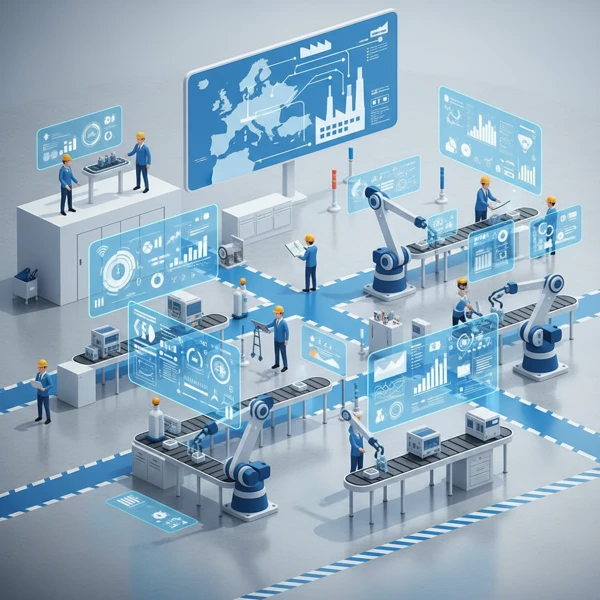
Many European factories are already automated, right? Sure. But often, it's a patchwork quilt of systems acquired over decades. You’ve got a robot here, a vision system there, and a legacy PLC platform over yonder. These standalone solutions, while effective in their specific tasks, rarely communicate seamlessly.
The result? Data doesn't flow freely between machines and enterprise systems like MES or ERP. This creates unseen bottlenecks, delays in decision-making, and limits true production line optimization. You're constantly battling unexpected equipment failures and quality inconsistencies that generic solutions simply can't address effectively. It's frustrating to know you have powerful tools, but they're not working as a team.
Hot Take: Investing in more standalone machines without an overarching integration strategy is like patching a leaky roof with a sieve. You're just creating new inefficiencies down the line.
The vision for truly integrated systems
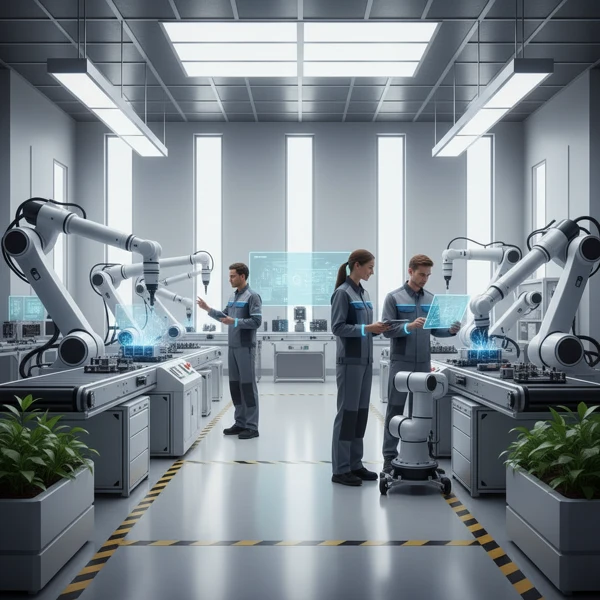
Imagine a factory where every machine, every sensor, and every piece of software works in perfect harmony. This isn't science fiction; it's the promise of truly integrated automation systems. We're talking about a cohesive ecosystem where data from custom vision systems, IoT sensors, and robotics flows into a centralized AI-driven analytics platform.
This allows for real-time adjustments, predictive maintenance, and an agile response to market shifts. The most promising emerging trends in AI-driven automation involve leveraging these interconnected systems to learn and adapt autonomously, pushing the boundaries of what's possible in advanced manufacturing. According to ScienceDirect, 2024, AI is revolutionizing industries worldwide by enabling smarter, more interconnected production.
The core idea here is synergy. When your industrial automation solutions are designed to communicate, the whole becomes vastly greater than the sum of its parts. This holistic approach addresses the root causes of inefficiency, rather than just treating symptoms.
Industry 5.0: Human-centric innovation
Integrated automation isn't just about robots replacing humans; it's about redefining the relationship. This is where Industry 5.0 comes in. This paradigm emphasizes collaboration between humans and machines, focusing on well-being, sustainability, and resilience. It’s about leveraging technology to augment human capabilities, not diminish them, and to create adaptable, learning automation systems.
The future implications of Industry 5.0 for automation are profound. We're moving towards systems that are not only efficient but also user-friendly for floor teams, safe, and environmentally responsible. It's a proactive approach to developing industrial automation systems in Europe that address societal challenges alongside economic ones.
Did You Know? The European Commission's focus on a single market strategy [3] indirectly emphasizes the need for streamlined, efficient manufacturing to bolster economic competitiveness, a perfect fit for integrated automation's goals.
This commitment means less waste, lower energy consumption, and a more robust supply chain. For niche industries or those with strict regulatory demands, this focus on human-centric, compliant, and sustainable operations isn't just a bonus — it's a competitive imperative.
Key pillars of integrated automation success
So, how do we build these intelligent ecosystems? It comes down to a few critical pillars working together. These aren't just buzzwords; they're the foundational technologies that, when integrated, solve those persistent operational headaches like unexpected downtime and inconsistent quality.
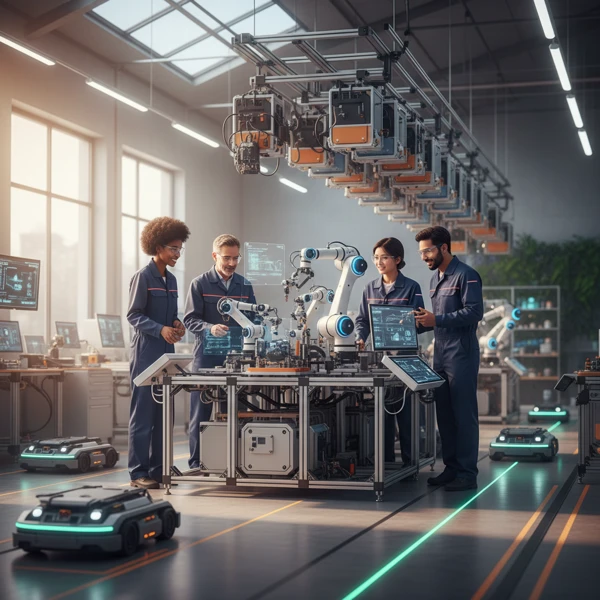
"The real magic happens when data flows freely. A custom vision system is powerful, but when its output is immediately fed into an AI for predictive analytics, that's where you unlock truly transformative efficiency. It's about connectivity, not just capability."
— Lead Automation Engineer, PRIMATRONIC
Vision systems that see everything
Gone are the days of simple pass/fail vision checks. Modern custom vision systems are sophisticated 'eyes' for your production line. They perform high-speed quality inspection, detect minute defects that human eyes miss, and even guide robotics with pinpoint accuracy. But here's the kicker: they also generate massive amounts of data.
This visual data is invaluable. It feeds into AI algorithms, enabling not just quality control but also process optimization and, crucially, predictive maintenance. For instance, a vision system might detect minute wear on a component, signaling potential failure long before it impacts production. This proactive insight into your operations dramatically reduces the chances of unexpected breakdowns. These are solutions tailored for manufacturing, automotive, and research sectors in Europe, ensuring precision where it matters most.
AI and IoT: The intelligence behind the scenes
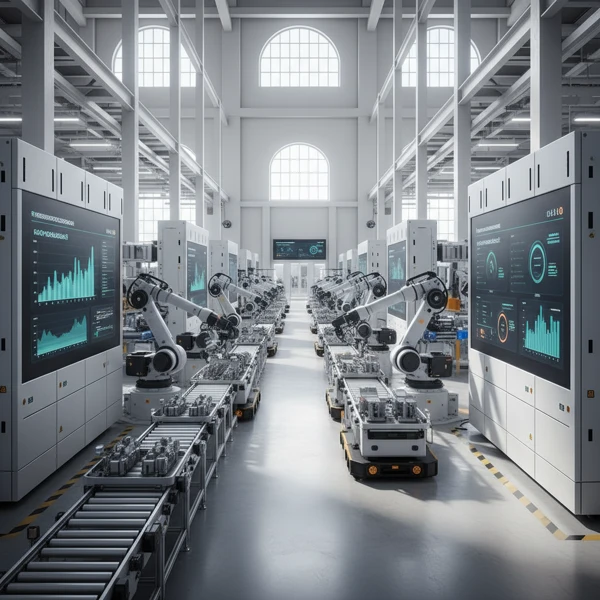
If vision systems are the eyes, then AI and IoT are the brains and nervous system. IoT sensors collect real-time data from every machine: temperature, vibration, pressure, energy consumption. This deluge of data would be overwhelming without AI.
AI algorithms analyze this information to spot patterns, predict potential equipment failures before they happen, and even optimize production parameters on the fly. This predictive maintenance, leveraging AI to prevent downtime, is a game-changer for ROI. It transforms reactive repairs into proactive interventions, significantly boosting throughput and reducing operational costs. For example, AI automation for repetitive workflows ensures consistency and frees up human operators for more complex tasks.
Seamless integration for true synergy
This is where many automation projects falter: getting disparate systems to talk to each other. The answer lies in custom electronics and software. Standard off-the-shelf solutions often can't bridge the gaps between unique legacy equipment, specialized sensors, and modern software. This is particularly true for complex challenges like automotive smart controls and HMI development.
Primatronic offers integrated systems encompassing custom electronics, vision, and production software, providing tailored solutions for manufacturing operational efficiency. This ensures true data interoperability, breaking down silos between shop floor machines, Manufacturing Execution Systems (MES), and Enterprise Resource Planning (ERP) systems. MES/ERP integration for real-time production monitoring and data analytics becomes effortless, providing a single source of truth for your entire operation.
| Feature | Traditional Automation | Integrated Automation (2026) |
|---|---|---|
| Data Flow | Siloed, manual transfer, limited visibility | Real-time, bidirectional, enterprise-wide |
| Maintenance | Reactive (break-fix), scheduled downtime | Predictive, proactive, minimal unscheduled downtime |
| Adaptability | Rigid, difficult to reconfigure for new products | Agile, modular, learns and adapts autonomously |
| Quality Control | Manual checks, sampling, post-production rework | Inline, AI-driven inspection, defect prevention |
| Human Role | Repetitive tasks, oversight of simple machines | Supervision, problem-solving, collaboration with intelligent systems |
This isn't about simply connecting wires; it's about crafting a digital nervous system for your factory that enables seamless communication across every layer. It allows for the development of mechatronic devices that fit specific needs, rather than adapting your needs to generic solutions. For deeper insights into scaling your operations, I put together a quick-read PDF covering advanced automation architecture — grab it here.
Strategic implementation for European success
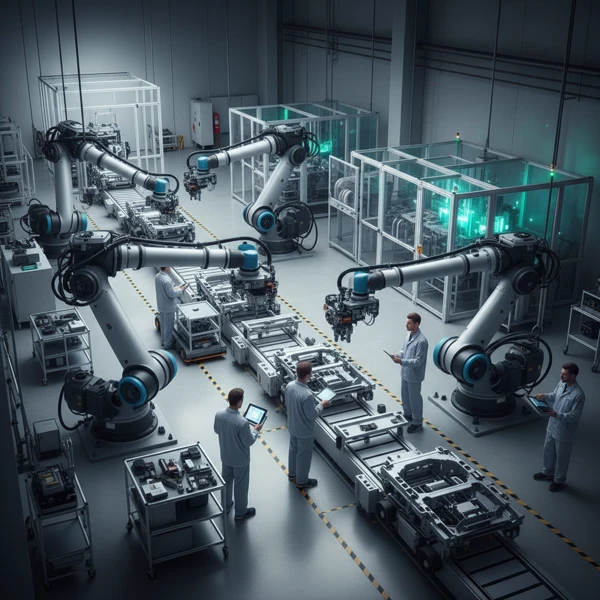
Implementing a full integrated automation system might sound daunting, especially for complex European operations with specific regulatory nuances. But here’s the secret: it doesn't have to be a rip-and-replace nightmare. A smart strategy focuses on phased implementation and iterative development, minimizing disruption and maximizing control.
Your roadmap to automation mastery
Starting small and scaling up is key. We recommend beginning with pilot projects focused on a single bottleneck or a critical, repetitive workflow. This allows your team to prototype and test radical new ideas for future production processes in a controlled environment. Think of it as a low-risk playground for innovation.
A typical roadmap for a successful phased automation implementation in Europe might look like this:
- Assessment & Strategy: Identify key pain points, operational goals, and compliance requirements.
- Pilot Project Design: Select a contained area for a proof-of-concept.
- Custom Solution Development: Build and integrate the specific vision, electronics, and software for the pilot.
- Deployment & Iteration: Implement the pilot, gather data, and refine based on real-world performance.
- Scalable Expansion: Roll out successful components to other areas, continuously monitoring and optimizing.
This approach directly addresses the fear of large-scale, disruptive changes, ensuring a smooth transition towards a smarter factory automation strategy.
Partnering for innovation and results
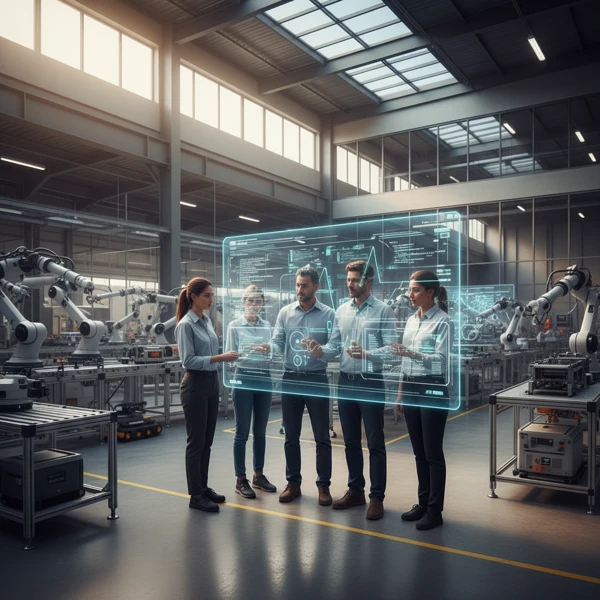
Finding the right partner for your integrated automation journey is non-negotiable. You're looking for more than a vendor; you need a collaborator who understands the specific challenges and regulatory demands of your niche industry. They should be willing to explore and experiment, pushing the boundaries of what's possible with advanced automation for production.
An ideal partner offers more than just off-the-shelf components. They provide custom-built solutions — from PLC platforms for automation to bespoke PCB and firmware design. They also deeply understand European regulatory compliance and prioritize user-friendly interfaces for your floor teams, aligning with Industry 5.0 principles. This collaborative expertise is what distinguishes a successful integration from a costly headache.
Pro-Tip: Look for partners with a proven track record in complex sectors like automotive or specialized manufacturing. Their experience with high-stakes environments is a strong indicator of their capability.
Measuring success and driving ROI
The quantifiable economic impacts of integrated automation in Europe are compelling. This isn't just about 'feeling more efficient'; it's about hard numbers. You need to measure success in tangible terms:
- Downtime Reduction: Integrated systems, especially with AI predictive maintenance, can slash unscheduled downtime by significant margins.
- Efficiency Gains: Optimized workflows, real-time adjustments, and reduced bottlenecks lead to higher throughput and faster production cycles.
- Quality Improvement: Advanced vision systems and AI-driven inspection prevent defects, reducing rework, scrap rates, and customer returns.
- Cost Savings: Lower energy consumption, reduced labor for repetitive tasks, and less waste directly impact your bottom line.
By focusing on these metrics, you can clearly demonstrate the ROI of integrated automation. For instance, reducing unscheduled downtime by just 10% can save a medium-sized European manufacturer hundreds of thousands of Euros annually, proving the immense value of intelligent systems.
Automation ROI Calculator: What's Your Efficiency Boost?
Curious about the potential impact of integrated automation on your operations? Use our simple calculator below to get a rough estimate of your potential annual savings and payback period. Let's see how smart integration can transform your numbers!
Calculate Your Automation ROI
Your Estimated Automation ROI:
Estimated Annual Savings: €0
Estimated Payback Period: 0 years
Estimated Efficiency Gain: 0%
Key Sources & Trust
| # | Source | Trust Score | Key Insight | Link |
|---|---|---|---|---|
| 1 | National University Blog | 80/100 | AI Statistics & Trends for 2026 | nu.edu |
| 2 | ScienceDirect (Elsevier) | 83/100 | AI revolutionizing industries worldwide | sciencedirect.com |
| 3 | European Commission | 65/100 | Communication on the Single Market Strategy (PDF) | ec.europa.eu |
Frequently Asked Questions
Integrated automation isn't just about individual machines; it's about connecting every part of your production process into a cohesive, intelligent ecosystem. Unlike traditional, siloed automation that might automate a single task, integrated systems ensure seamless data flow and communication between robotics, vision systems, AI, and enterprise software (MES/ERP). This synergy enables real-time optimization, predictive maintenance, and agile adaptation to market demands, offering a holistic boost to efficiency.
Integrated automation significantly reduces downtime through predictive maintenance. By leveraging IoT sensors and AI, the system constantly monitors machine health, detecting anomalies and potential failures long before they occur. This allows for scheduled maintenance, preventing unexpected breakdowns and the costly line stoppages they entail. Real-time data also identifies bottlenecks and inefficiencies, leading to proactive adjustments that keep production flowing smoothly.
For European manufacturers, integrated automation translates to higher operational efficiency through optimized workflows, reduced human error, and faster production cycles. Cost savings come from minimized waste, lower energy consumption, fewer unexpected repairs, and improved quality control that reduces rework and recalls. Ultimately, it enhances competitiveness, allows for compliance with stricter regulations, and supports a more sustainable manufacturing model aligned with Industry 5.0 principles.
Integrated automation is at the heart of Industry 5.0. It moves beyond mere efficiency to prioritize human-centric approaches, sustainability, and resilience. This means designing systems that foster collaboration between humans and machines, ensuring worker safety and job enrichment. It also drives sustainable practices through optimized resource use and waste reduction, while building resilient production lines that can quickly adapt to disruptions. User-friendly interfaces are a key part of this human-centric design.
Custom vision systems are the 'eyes' of an integrated automation setup, going far beyond basic quality checks. They enable high-speed, precision inspection, defect detection, and precise guidance for robotics. More importantly, they feed critical visual data into AI algorithms for advanced analytics, predictive maintenance, and real-time process adjustments. This allows for unparalleled quality control and a deeper understanding of production line performance.
Measuring ROI involves tracking key performance indicators (KPIs) before and after implementation. Look at metrics like reduction in unscheduled downtime, increase in production throughput, decrease in scrap rates, improvement in product quality (fewer defects), and reduction in energy consumption. You should also consider intangible benefits like enhanced worker safety and faster time-to-market for new products. A phased implementation strategy with pilot projects helps in demonstrating clear, incremental ROI.
Ready to transform your European manufacturing?
Integrated automation isn't just about tomorrow; it's about making your factory competitive and resilient today. If you're tired of piecemeal solutions and ready for truly cohesive, intelligent production, let's talk. We build custom, operator-focused solutions that deliver measurable ROI.
Let's build your smart factoryRelated Posts
Operator-centric automation: boost efficiency & innovate production in 2026
Boost manufacturing automation efficiency in 2026 with operator-centric automation. Drive peak performance & breakthrough innovation.
Fixed-price automation projects: predictable roi for european manufacturing 2026
European manufacturers: unlock predictable ROI with fixed-price automation projects in 2026. Learn how to manage costs and drive innovation.
Edge AI and custom automation: how to explore the future of European manufacturing in 2026
Discover how European manufacturers can leverage Edge AI and custom automation in 2026 to innovate, optimize production, and achieve breakthroughs.