Operator-centric automation: boost efficiency & innovate production in 2026
table of contents
- What makes operator-centric automation essential now?
- How can we prototype novel automation concepts?
- The role of custom electronics
- Co-creating your next breakthrough
- What are the benefits of integrated automation design?
- Bridging the gap with usability
- Data for predictive insights
- Assess your automation readiness
- Key sources & trust
- Frequently asked questions
key takeaways
- Operator-centric automation is crucial for modern manufacturing, aligning with Industry 5.0's focus on human-robot collaboration and sustainability.
- Intuitive interfaces and integrated systems significantly boost efficiency, reduce errors, and accelerate innovation.
- Prototyping novel concepts with custom electronics and advanced vision systems allows for tailored solutions to niche industry challenges.
- Leveraging integrated data platforms, like the Materials Project, enables predictive insights and data-driven product development.
- A human-first design approach in automation leads to faster adoption, reduced training costs, and a more resilient, innovative workforce.
What makes operator-centric automation essential now?
Operator-centric automation is essential now because it addresses the urgent need for manufacturing systems that not only boost productivity but also empower the human workforce, aligning with the shift from Industry 4.0 towards human-focused Industry 5.0 principles. It prioritizes intuitive design, leading to faster adoption, fewer errors, and a more innovative production floor.
Remember that feeling when you first encountered a piece of factory machinery that felt like it was designed by an alien for another species? The labyrinth of buttons, obscure displays, and a manual thicker than a phone book? Yeah, that's what we're actively working to eliminate in 2026. The shift isn't just about throwing more robots at a problem; it's about making those robots and automated systems work seamlessly with the people who operate them.
In today's landscape, automation isn't just a nice-to-have feature; it's a fundamental necessity for survival and growth. We're moving beyond the purely efficiency-driven Industry 4.0 mindset into Industry 5.0, which emphasizes aligning technological innovation with human needs and sustainability[1]. This means automation is now explicitly designed to support employees, not just replace them, making human-robot collaboration in manufacturing a core philosophy.
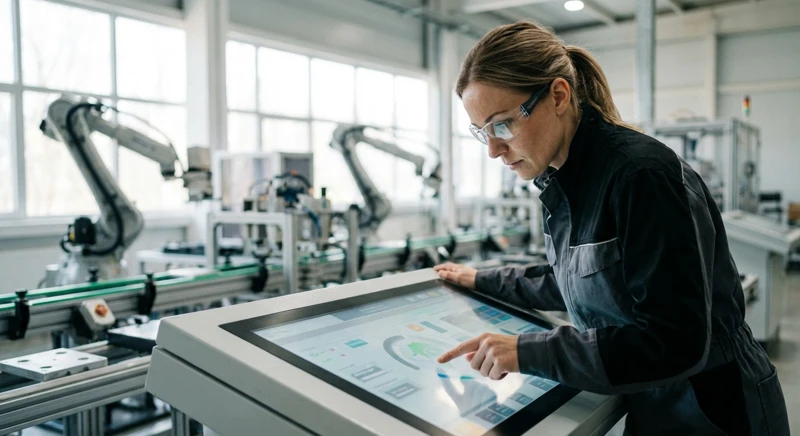
It’s no longer enough for automation to just work; it needs to be intuitive. Why? Because complex interfaces lead to frustration, errors, and significant retraining costs. We're seeing companies focus on both productivity and employee satisfaction. This means creating advanced automation solutions where the operator feels empowered, not overwhelmed. Retrofitting existing systems and optimizing energy consumption are becoming new business cases, making usability in automated systems non-negotiable.
Hot Take: The biggest bottleneck in your "automated" production line might not be the machinery, but the human-machine interface. Over-engineered complexity is the silent killer of efficiency and innovation.
The goal isn't just a faster line, but a smarter, more resilient one where humans and machines truly collaborate. This is where operator-centric design shines, transforming challenges into opportunities for peak manufacturing automation efficiency.
How can we prototype novel automation concepts?
For innovation explorers and niche industry specialists, the real challenge isn't just implementing existing automation, but pushing its boundaries. You're looking to prototype and test radical new ideas for future production processes. This means moving beyond off-the-shelf solutions and into the realm of co-creation, where partners understand your specific manufacturing processes and are willing to experiment.
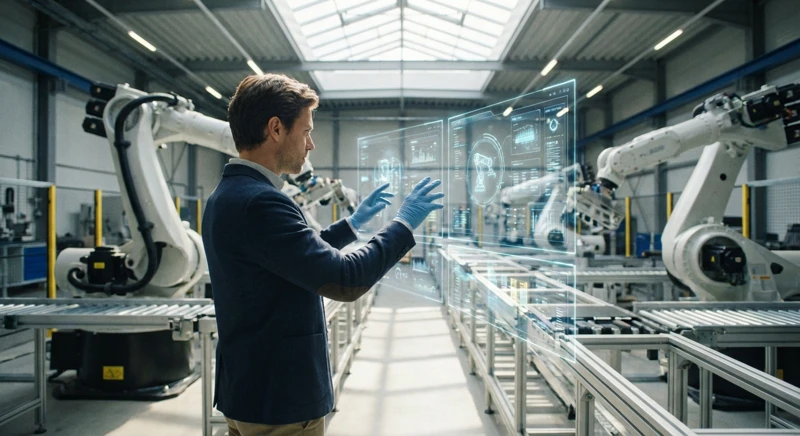
This is where specialized expertise becomes critical. We work closely with companies to develop groundbreaking automation technologies that solve complex, previously unsolved problems. It’s about leveraging custom electronics, advanced vision systems, and flexible integration with your existing MES/ERP systems to bring truly innovative concepts to life. For a deeper dive into exploring future manufacturing with AI, check out our guide on edge AI and custom automation: how to explore the future of european manufacturing in 2026.
The role of custom electronics
Off-the-shelf components are great for standard tasks, but when you're looking for unique human-robot interaction or highly specialized operational needs, they simply don't cut it. This is precisely where custom electronics become the game-changer. Imagine a sensor array that detects anomalies specific to your delicate product line, or an HMI that adapts its layout based on the operator's skill level and task complexity.
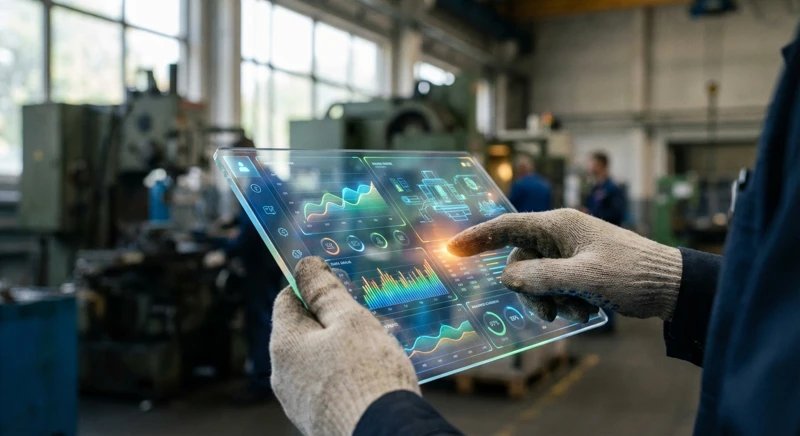
Custom electronics enable novel forms of interaction that enhance operator performance and comfort. They are vital for creating bespoke solutions, from specialized control interfaces to advanced feedback systems that go beyond standard visual and auditory cues. This level of customization ensures that the automation precisely fits the job, rather than forcing the job to fit the automation.
For more on how custom solutions drive innovation, you might find our guide on edge AI & custom automation: prototyping 2026 manufacturing future insightful.
Co-creating your next breakthrough
Developing truly novel automation concepts isn't a solitary endeavor; it's a partnership. We believe in a collaborative approach, acting as an extension of your R&D team. This means starting with your pain points, brainstorming radical ideas, and then rapidly prototyping solutions together.
We combine deep engineering expertise with a practical, operator-focused philosophy. This allows us to translate ambitious visions into tangible, testable automation systems. We integrate custom electronics with advanced vision systems for quality control and flexible MES/ERP integration for production visibility, ensuring your innovative solutions are built on a solid foundation.
Machine learning is game-changing for materials discovery because it saves scientists from repeating the same process over and over while testing new chemicals and making new materials in the lab. To be successful, machine learning programs need access to large amounts of high-quality, well-curated data. With its massive repository of curated data, the Materials Project is AI ready.
— Kristin Persson, Materials Project Director and Co-Founder [2]
This approach allows for iterative development, where initial concepts are refined based on real-world testing. It ensures that the final solution isn't just technically impressive but also genuinely enhances your operational capabilities, preparing you for the manufacturing future.
What are the benefits of integrated automation design?
For manufacturing operations managers, the persistent headaches of unexpected equipment failures and bottlenecks are all too familiar. Integrated automation design directly tackles these issues by emphasizing seamless, operator-centric systems. This isn't just about bolting on new tech; it's about weaving it into your entire production fabric, making everything easier to use and maintain.
Integrated solutions mean everything talks to everything else – your machines, your software, and most importantly, your operators. It’s about building a robust ecosystem where usability is paramount, retraining is minimal, and systems seamlessly integrate with your existing MES/ERP infrastructure. This directly translates to significant production line optimization and boosts overall manufacturing automation efficiency, especially crucial for those in niche industries with specific regulatory demands.
According to Berkeley Lab[2], the Materials Project, which began in 2011, is used 5,000 times per day by over 650,000 registered users, illustrating the power of integrated, data-rich platforms.
Bridging the gap with usability
The single most impactful way to boost automation ROI is through intuitive interfaces. When operators don't have to decipher cryptic commands or navigate clunky systems, errors plummet, and throughput soars. Think about it: how much time is lost to small, avoidable mistakes caused by poor UX? These add up fast.
Our approach centers on smart controls and human-machine interfaces (HMIs) that are designed from the ground up with the operator in mind. This means clear visualizations, guided workflows, and proactive alerts. Comprehensive operator training, built around these user-friendly systems, ensures rapid adoption and minimizes the learning curve, making your team productive almost immediately.
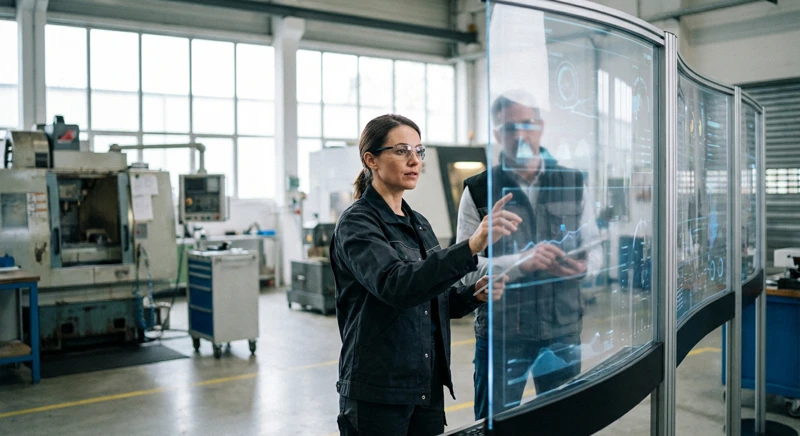
This focus on usability in automated systems isn't just a nicety; it's a strategic imperative. It reduces employee turnover, fosters a more engaged workforce, and enables quicker responses to production changes. It effectively answers the question of how to leverage custom vision systems for predictive maintenance and how to develop adaptable, learning automation systems by making human input and feedback central to their operation. Integrated systems with strong usability are the foundation for any true production line optimization.
Pro-Tip: When evaluating automation solutions, always ask for a demo from an actual operator's perspective. If it feels cumbersome to you, it will be a drain on your team's efficiency in practice.
Data for predictive insights
Beyond the immediate operational benefits, integrated systems are powerful data factories. They collect granular information about every aspect of your production line, which can then be leveraged for powerful predictive insights. This means moving from reactive maintenance—fixing things once they break—to proactive intervention, preventing downtime before it ever occurs.
By integrating IoT with automation for data analysis, we can deploy custom vision systems for quality control in manufacturing and predictive maintenance. These systems monitor machine health, identify subtle deviations, and alert operators to potential issues, allowing for scheduled maintenance during off-peak hours rather than costly emergency stops. According to Anubhav Jain, Berkeley Lab Staff Scientist[2], platforms like the Materials Project are critical for training machine learning models for predicting materials properties, which engineers use to develop products. This principle applies equally to manufacturing data.
This granular data also fuels continuous process improvement. Identifying bottlenecks, optimizing resource allocation, and refining operational parameters become data-driven decisions, not guesswork. This means every aspect of your production can be continuously refined for maximum output and minimal waste. I put together a .
Assess your automation readiness
Wondering where your operations stand on the journey to operator-centric automation? This quick assessment will help you pinpoint areas for improvement and discover your unique automation profile. Let's see how ready you are to unlock peak efficiency and innovation!
1. how often do your operators struggle with complex interfaces?
Constantly
Interfaces are a source of daily frustration and frequent errors.
Often
Some systems are difficult to use, leading to occasional mistakes and delays.
Sometimes
Most interfaces are manageable, but complex tasks can still be tricky.
Rarely
Our systems are generally intuitive, operators work smoothly.
2. are your automation systems integrated with MES/ERP?
Not at all
Automation systems operate in silos, requiring manual data transfer.
Partially
Some systems are connected, but data flow is incomplete or inconsistent.
Mostly
Key systems are integrated, providing a decent overview of operations.
Fully
All automation systems are seamlessly integrated with MES/ERP, real-time data flow.
3. how quickly can you onboard new operators to automated lines?
Months
Extensive training periods are required for new hires to reach proficiency.
Weeks
A few weeks are needed, but productivity ramps up slowly.
Days
New operators can quickly learn essential tasks with minimal guidance.
Hours
Systems are so intuitive, new operators become productive almost instantly.
4. do you regularly prototype novel manufacturing concepts?
Rarely
Innovation is slow; we mostly rely on proven, traditional methods.
Sometimes
We've tried a few new ideas, but the process is challenging and slow.
Often
We have a structured process for testing new concepts, but face integration hurdles.
Yes, frequently
Our agile approach allows us to rapidly prototype and integrate new ideas.
next steps for you:
key sources & trust
| # | Source | Trust Score | Key Insight | Link |
|---|---|---|---|---|
| 1 | ScienceDirect | 83/100 | Academic research on AI-enhanced collaborative robotics. | sciencedirect.com |
| 2 | Berkeley Lab News Center | 85/100 | Details on the Materials Project and its role in AI for materials science. | newscenter.lbl.gov |
| 3 | Datadog Case Study | 50/100 | Technical details on Materials Project infrastructure. | datadoghq.com |
| 4 | Scio Automation | 50/100 | Key trends and opportunities in automation for 2026. | scio-automation.com |
| 5 | Konica Minolta Blog | 50/100 | Trends shaping digital transformation. | konicaminolta.eu |
| 6 | McKinsey Research Paper | 65/100 | Impact of automation and AI at scale. | mckinsey.com |
frequently asked questions
Operator-centric automation is an approach to industrial automation design that prioritizes the human operator, ensuring systems are intuitive, easy to use, and enhance rather than complicate human tasks. It focuses on creating seamless human-robot collaboration, reducing cognitive load, and enabling operators to manage complex processes efficiently.
By simplifying interfaces and integrating systems, operator-centric automation drastically reduces training times, minimizes human error, and speeds up troubleshooting. This leads to higher uptime, optimized production flows, and a more adaptive workforce, directly boosting overall manufacturing automation efficiency.
Absolutely. A core strength of this approach is its modularity and adaptability. Solutions are designed to integrate seamlessly with existing MES/ERP systems and legacy equipment, allowing for phased implementation and optimized energy consumption without a complete overhaul.
Custom electronics are crucial for creating highly specialized human-robot interaction and solving unique operational challenges. They enable bespoke sensors, specialized control interfaces, and adaptive mechanisms that off-the-shelf solutions simply can't provide, ensuring perfect fit and optimal usability for niche industry automation challenges.
Not at all. While large enterprises benefit significantly, the modular and scalable nature of operator-centric automation makes it highly accessible for small to medium-sized businesses (SMBs) as well. The focus on practical problems means solutions are tailored to deliver tangible ROI regardless of company size.
Industry 5.0 emphasizes human-centricity, sustainability, and resilience, which are all pillars of operator-centric automation. By placing the operator at the heart of design, these systems foster human-robot collaboration, improve workplace safety, and integrate environmental considerations, moving beyond the purely productivity-focused Industry 4.0.
Integrated operator-centric systems gather rich operational data, enabling real-time performance monitoring, predictive maintenance, and identification of bottlenecks. This granular data analysis in manufacturing allows for continuous process improvement, reduced downtime, and data-driven decision-making to optimize production line optimization.
Ready to transform your production floor?
Stop battling unexpected failures and hard-to-use systems. Let's design automation that genuinely empowers your operators and drives innovation.
Explore PRIMATRONIC SolutionsRelated Posts
Fixed-price automation projects: predictable roi for european manufacturing 2026
European manufacturers: unlock predictable ROI with fixed-price automation projects in 2026. Learn how to manage costs and drive innovation.
Edge AI and custom automation: how to explore the future of European manufacturing in 2026
Discover how European manufacturers can leverage Edge AI and custom automation in 2026 to innovate, optimize production, and achieve breakthroughs.
Edge AI & custom automation: prototyping 2026 manufacturing future
Discover how to prototype next-gen manufacturing with edge AI and custom automation for 2026 production floors. Learn best practices and solutions.