Fixed-price automation projects: predictable roi for european manufacturing 2026
For European manufacturers, 2026 is less about simply embracing automation and more about ensuring that every automation investment delivers a predictable, quantifiable return. Fixed-price automation projects are the game-changer here, fundamentally altering how you manage costs and mitigate financial risks. By locking in project expenses upfront, manufacturers gain unparalleled clarity, transforming budget uncertainty into a clear roadmap for innovation and growth.
Key Takeaways for Predictable Automation ROI
- Fixed-price models eliminate budget surprises, offering clear, upfront costs for complex automation projects.
- European manufacturers can achieve strategic autonomy and Industry 5.0 goals without financial risk.
- Detailed scoping, transparent deliverables, and robust project management are essential for predictable outcomes.
- An automation ROI calculator becomes genuinely powerful when your investment costs are fixed.
- This approach fosters confidence for prototyping novel AI, custom electronics, and human-robot interaction.
Table of Contents
- what makes automation projects predictable now?
- why fixed-price automation is crucial for european manufacturing?
- strategic autonomy and semiconductor packaging
- navigating industry 4.0 and industry 5.0
- combating production bottlenecks and downtime
- how to achieve predictable automation roi with fixed-price?
- demystifying fixed-price project scoping
- calculating roi with predictable costs
- the PRIMATRONIC advantage: end-to-end solutions
- prototype new ideas with confidence
- exploring advanced AI and novel automation concepts
- custom electronics and human-robot interaction
- addressing ethical considerations and cybersecurity
- Frequently Asked Questions
what makes automation projects predictable now?
Automation projects achieve predictability by embracing the fixed-price model, which eliminates the guesswork from budgeting and timelines. This approach ensures that European manufacturers in 2026 can confidently invest in complex industrial automation solutions, knowing the total financial commitment upfront. It's a fundamental shift that mitigates financial risk and provides clear foresight on project delivery.
You know that feeling when you sign off on a project, then weeks later, the "unexpected costs" start rolling in? It’s enough to make any operations manager hesitant about innovation. Fixed-price automation projects are designed to cut that anxiety out entirely. By meticulously defining the project scope, deliverables, and timelines from the outset, providers commit to a specific cost. This level of clarity is a massive advantage for any manufacturer looking to modernize without the constant threat of budget overruns.
This model isn't just about avoiding surprises; it's about strategic planning. For European manufacturing, navigating competitive global markets and aiming for Industry 5.0 leadership requires investment in advanced technologies. Having a clear, predictable cost structure allows for more accurate financial forecasting and helps justify those critical investments internally. It simplifies the business case, making it easier to secure funding and align stakeholders around a clear, achievable goal.
why fixed-price automation is crucial for european manufacturing?
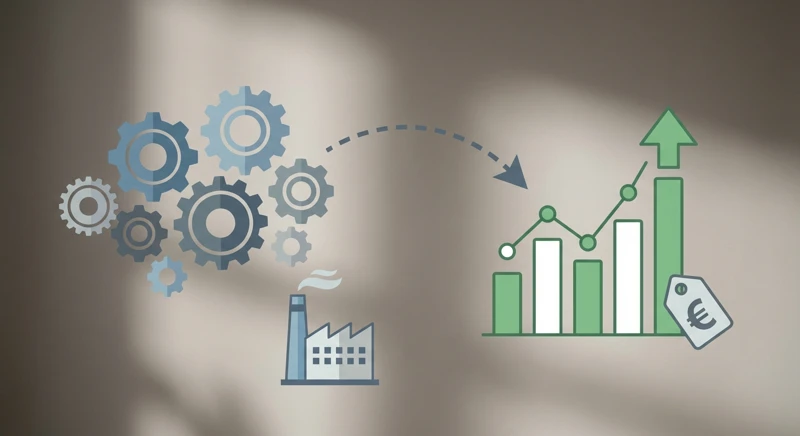
Fixed-price automation is crucial for European manufacturing because it provides the necessary financial stability and risk mitigation to innovate aggressively in a challenging global landscape. With increasing pressures for strategic autonomy, sustainable production, and digital transformation, controlled budgets are no longer a luxury but a strategic imperative. This model allows businesses to implement cutting-edge industrial automation solutions in Europe without fear of spiraling costs.
In 2026, European manufacturers face a complex balancing act. They need to drive innovation, embrace Industry 5.0 principles, and ensure strategic autonomy, all while battling rising energy costs, skilled labor shortages, and geopolitical uncertainties. Adopting advanced technologies, especially custom automation, is key to navigating these waters. However, traditional project models often come with open-ended budgets, turning a strategic investment into a financial gamble. Fixed-price projects remove that uncertainty, providing a clear path to adopting transformative technologies like AI and advanced robotics.
strategic autonomy and semiconductor packaging
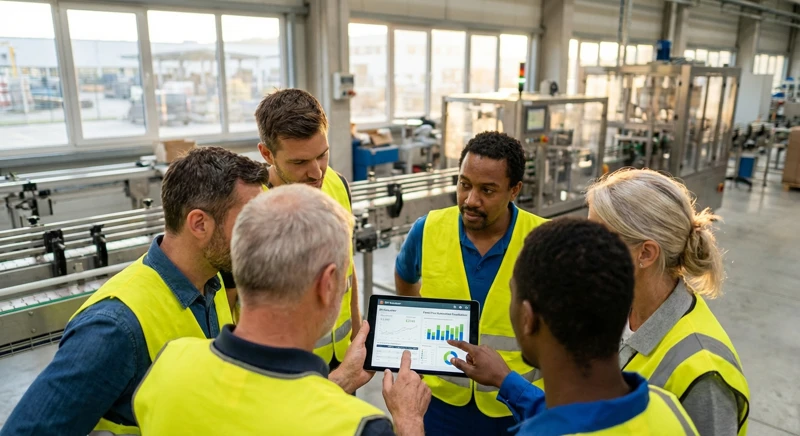
Europe's drive for strategic autonomy, particularly in critical sectors like semiconductor packaging, cannot afford financial ambiguity. The European Commission's Industrial Maritime Strategy, adopted on March 4, 2026, exemplifies this broader push, aiming to reinforce industrial sovereignty, trade, and economic security across vital sectors.
In semiconductor packaging, this means investing in advanced manufacturing capabilities that are both cutting-edge and financially viable. Custom automation, delivered through fixed-price models, is crucial here. It allows European manufacturers to develop specialized processes and new functionalities essential for future electronic devices. As Steffen Kröhnert, Head of Business Unit "High-Density Packaging and Substrates" at Fraunhofer EMFT, highlights, "Europe needs to increase its share in semiconductor packaging to achieve strategic autonomy in the digital economy." This isn't just about market share; it's about control over critical components.
"Advanced packaging is not just about miniaturization; it's about enabling new functionalities and performance improvements that are critical for future electronic devices."
— Steffen Kröhnert, Head of Business Unit "High-Density Packaging and Substrates" at Fraunhofer EMFT [1]
Fixed-price projects in this context provide the stability needed to invest in these high-stakes areas, ensuring that the commitment to innovation doesn't become a blank cheque.
navigating industry 4.0 and industry 5.0
The journey from Industry 4.0's focus on connectivity and data to Industry 5.0's emphasis on human-centric, sustainable, and resilient manufacturing is a complex one. While Industry 4.0 brought us smart factories and IoT, Industry 5.0 pushes for deeper human-robot collaboration, energy efficiency, and a robust, adaptable production environment.
Embracing these advancements, especially the nuanced aspects of Industry 5.0 like personalized production and worker well-being, often requires bespoke automation solutions. Fixed-price projects are an ideal mechanism here because they ensure that the investment in these forward-looking, custom systems remains contained and predictable. You can push the boundaries of innovation without the lurking fear of an out-of-control budget.
- Industry 4.0 focus: Connectivity, data exchange, real-time analytics, cyber-physical systems, smart factories.
- Industry 5.0 evolution: Human-centricity, sustainability, resilience, personalized production, advanced human-robot collaboration.
- Fixed-price benefit: Allows manufacturers to invest in complex, tailored solutions for these evolving paradigms with financial certainty.
combating production bottlenecks and downtime
Few things frustrate a manufacturing operations manager more than unexpected equipment failures or persistent bottlenecks slowing down production lines. These aren't just minor inconveniences; they directly impact throughput, lead to missed deadlines, and erode profitability. Investing in the right automation is often the solution, but the fear of unpredictable costs can delay crucial upgrades.
This is where fixed-price projects truly shine. They allow you to address those nagging pain points – whether it's optimizing a specific assembly step with a custom robotic cell or integrating advanced vision systems for real-time quality control – with a clear understanding of the financial commitment. No more holding back on vital improvements because you're worried about hidden fees or endless change orders. You know what you're paying, and you know what you're getting.
For more on tackling these issues, check out our guide on 2026 production bottleneck solutions: fix your flow & boost output. The core idea is simple: strategic automation, when procured with financial predictability, becomes a powerful tool against downtime and inefficiency.
| Factor | Fixed-Price Project | Time & Materials Project |
|---|---|---|
| Cost Predictability | High (Cost agreed upfront) | Low (Variable, based on hours & resources) |
| Risk for Client | Low (Provider absorbs cost overruns) | High (Client absorbs all cost overruns) |
| Scope Definition | Critical & Detailed (Upfront) | Flexible (Can evolve during project) |
| Incentive for Efficiency | High (Provider motivated to finish on budget/time) | Lower (More hours = more revenue for provider) |
| Suitability for Innovation | Good (If innovation is scoped carefully) | Excellent (For highly exploratory R&D) |
how to achieve predictable automation roi with fixed-price?
Achieving predictable automation ROI with a fixed-price model hinges on meticulous planning and clear communication. A fixed-price automation project means the total investment is locked in from initial scoping to final delivery, eliminating budget uncertainty. This clarity simplifies ROI calculations, allowing manufacturers to accurately forecast financial returns based on measurable improvements in efficiency, throughput, and quality.
Here’s the deal: if you don’t know what your automation project will ultimately cost, how can you possibly measure its return on investment effectively? The beauty of fixed-price models is that they provide the anchor point for every ROI calculation. No more guessing, no more contingency funds for unknown unknowns. It transforms a nebulous "investment in the future" into a concrete business case with a clear payback period.
demystifying fixed-price project scoping
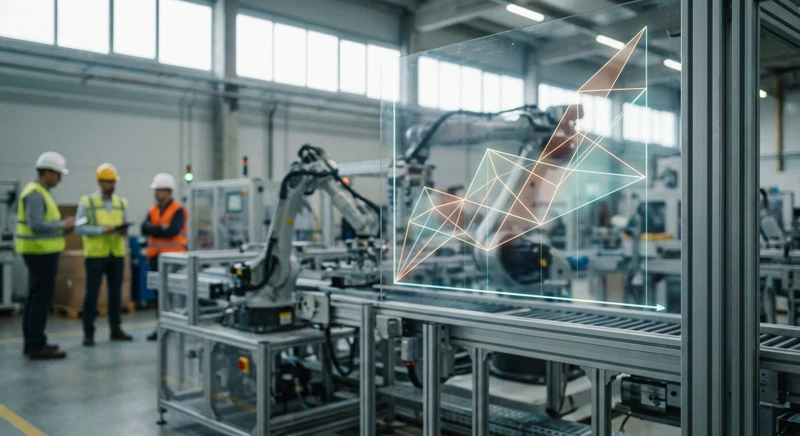
The magic behind predictable costs is in the scoping. This isn't just a casual conversation; it's an in-depth collaboration to define every facet of the project. A comprehensive proposal details:
- Technical Specifications: What hardware, software, and integrations are involved?
- Functional Requirements: What exactly will the automated system do?
- Performance Metrics: How fast, how accurate, what uptime?
- Deliverables: Every piece of hardware, software, documentation, and training.
- Timelines: A detailed project schedule with milestones.
- Acceptance Criteria: Objective metrics to determine project completion and success.
A well-defined scope is the bedrock of a fixed-price model. It ensures both parties are aligned on expectations, minimizing the chances of disagreements or unexpected changes down the line. It's about being incredibly thorough upfront to ensure smooth sailing later. For example, if you're looking into integrating IoT with automation for data analysis, every data point and dashboard requirement must be explicitly detailed.

calculating roi with predictable costs
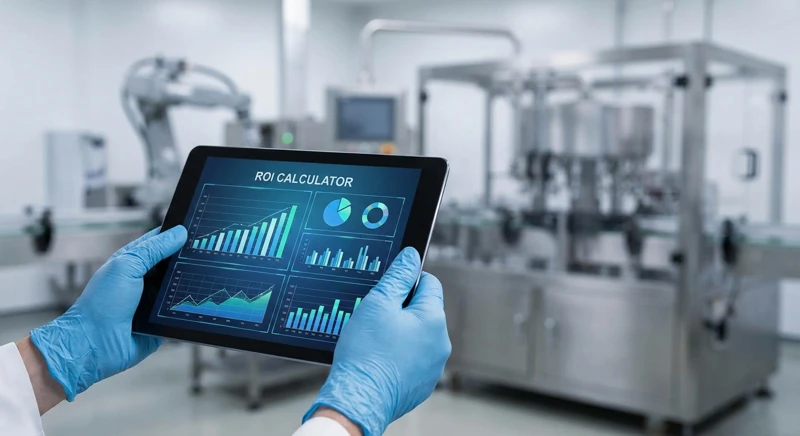
With a fixed investment, using an automation ROI calculator becomes incredibly straightforward. You plug in your known costs and then project your anticipated gains across several key metrics:
- Cost Savings: Reductions in labor, energy, raw material waste, or maintenance.
- Increased Throughput: Higher production volumes without additional shifts.
- Reduced Error Rates: Improved quality, less rework, fewer warranty claims.
- Time-to-Market Improvements: Faster production cycles leading to quicker product launches.
- Safety Improvements: A less tangible but critical ROI, reducing incidents and insurance costs.
According to the European approach to artificial intelligence (2026), the Commission and Member States plan to invest €1 billion per year in AI through Horizon Europe and Digital Europe programs. This kind of investment highlights the massive potential for ROI. Furthermore, the Commission will mobilize additional investments to reach an annual volume of €20 billion over the digital decade, with the Recovery and Resilience Facility making €134 billion available for digital initiatives.
These figures aren't just big numbers; they represent a strategic commitment to technologies that drive efficiency and profitability. Your fixed-price automation project plugs directly into this narrative, giving you a clear financial blueprint to capitalize on these trends.
Automation ROI Estimator
Curious about the financial upside of a fixed-price automation project? Let's quickly estimate your potential ROI and payback period.
Your Automation ROI Outlook:
the PRIMATRONIC advantage: end-to-end solutions
At PRIMATRONIC, we understand that true predictability isn't just about a price tag; it's about the entire journey. Our fixed-price model is built upon a foundation of comprehensive, end-to-end custom automation solutions. This means we handle everything from the initial deep-dive discovery and engineering design to manufacturing, software development, installation, and commissioning.
This integrated approach minimizes surprises because we're accountable for every piece of the puzzle. It ensures a smooth implementation process, as all elements are designed to work seamlessly together. When you choose a partner that provides complete, bespoke industrial automation solutions in Europe, you're not just getting a predictable price; you're getting a predictable, high-quality outcome that truly moves the needle for your operations.
I put together a detailed PDF that covers common pitfalls in automation project budgeting and how fixed-price contracts proactively address them — .
prototype new ideas with confidence
Prototyping radical new ideas and exploring the very edge of automation shouldn't come with a hidden price tag that sends your innovation budget into cardiac arrest. Fixed-price projects empower manufacturers, especially the 'Innovation Explorer' types, to experiment with cutting-edge technologies like advanced AI and human-robot interaction without the paralyzing fear of runaway costs. It’s about building a future-proof factory with financial peace of mind.
Innovation is messy, and experimentation often unearths unforeseen challenges. In traditional project models, this translates directly to cost overruns. But with a fixed-price approach, the risk shifts. This allows your team to push boundaries, test novel concepts, and even fail fast, knowing that the financial parameters are firm. This stability fosters a culture of agile development, crucial for staying competitive in 2026 and beyond.

exploring advanced AI and novel automation concepts
The landscape of AI-driven automation is exploding, offering opportunities from predictive maintenance systems that anticipate failures before they occur, to adaptable, learning automation systems that optimize production in real-time. Exploring these advanced concepts requires significant R&D, and fixed-price projects provide the financial certainty to invest in these explorations.
Whether it's deploying edge AI for hyper-localized data processing or developing complex machine learning models for anomaly detection, the initial investment can be substantial. A fixed-price model ensures that you can commit to these advanced projects with confidence, knowing the total cost before the first line of code is written or the first sensor is installed. This stability allows for focused innovation, free from budget anxieties.
- Predictive Maintenance: AI models analyze sensor data to forecast equipment failures, reducing unplanned downtime.
- Adaptable Automation: Systems that learn from real-time data, optimizing processes without human intervention.
- Quality Control: AI-powered vision systems for high-speed defect detection, exceeding human capability.
custom electronics and human-robot interaction
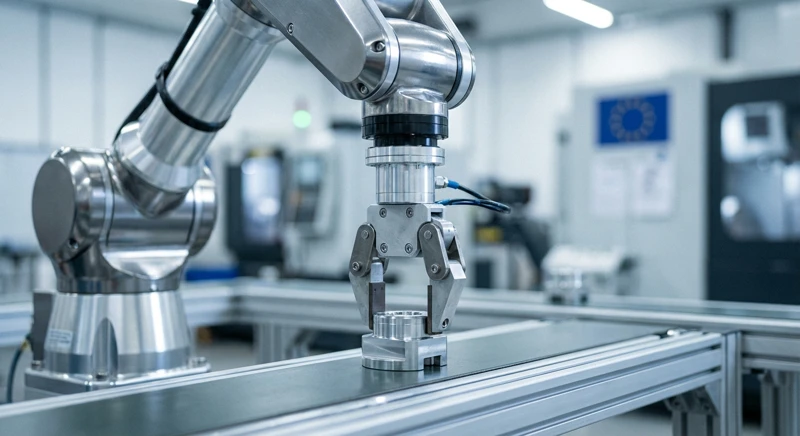
The future of manufacturing increasingly involves sophisticated custom electronics and intuitive human-robot interaction (HRI). Think bespoke control panels, specialized sensor arrays, or advanced human-machine interfaces (HMIs) tailored for specific industrial environments. These aren't off-the-shelf components; they are custom-engineered solutions designed to unlock new levels of efficiency and safety.
Developing these specialized components and integrating them into adaptable automation systems can be costly. However, fixed-price projects provide the financial guardrails needed to pursue these capabilities. They allow for the detailed design and development of unique electronic systems without the risk of an escalating bill. This is particularly relevant for sectors like automotive, where bespoke controls and advanced HRI are becoming standard for next-generation systems. For more on this, consider our guide on prototyping with custom automation.
addressing ethical considerations and cybersecurity
As automation becomes more advanced and AI-driven, the ethical considerations and cybersecurity implications become paramount. Connected systems, especially those handling sensitive production data or interacting directly with human operators, present new vulnerabilities. Addressing these isn't an afterthought; it needs to be integrated into the core design from day one.
Working with expert partners on fixed-price projects means these critical aspects are built in, not bolted on. A reputable automation provider will have robust cybersecurity protocols and ethical AI development guidelines embedded in their processes, ensuring your innovative systems are both secure and responsible. This provides significant peace of mind, knowing that your cutting-edge solutions are also foundational for long-term trust and reliability. Key considerations include:
- Data Privacy: Ensuring sensitive manufacturing data is protected from breaches.
- AI Bias & Transparency: Developing ethical AI that operates without unintended bias and offers explainable decisions.
- System Integrity: Protecting industrial control systems from cyber threats and unauthorized access.
- Human Safety: Designing human-robot interaction with paramount attention to operator well-being and clear safety protocols.
Key Sources & Trust
| # | Source | Trust Score | Key Insight | Link |
|---|---|---|---|---|
| 1 | Federal Transit Administration Review, 2022 | 95/100 | Fixed-price contracts reduce project cost overruns. | transit.dot.gov |
| 2 | European Commission Industrial Maritime Strategy, 2026 | 90/100 | Reinforces Europe's industrial sovereignty and economic security. | transport.ec.europa.eu |
| 3 | Fraunhofer EMFT - Steffen Kröhnert, 2024 | 65/100 | Importance of semiconductor packaging for Europe's strategic autonomy. | enas.fraunhofer.de |
| 4 | European Commission - Approach to AI, 2026 | 90/100 | EU investments in AI and digital initiatives. | digital-strategy.ec.europa.eu |
Frequently Asked Questions
A fixed-price automation project means the total cost is agreed upon upfront, based on a meticulously defined scope, deliverables, and timeline. It eliminates unexpected expenses and budget overruns for manufacturers, providing complete financial predictability from start to finish.
Predictable ROI comes from knowing your total investment from day one. This clarity allows for accurate calculation of payback periods and returns by comparing fixed costs against projected savings and revenue increases from automation, enabling confident financial forecasting.
For European manufacturers in 2026, fixed-price projects offer budget certainty, risk mitigation, and accelerated adoption of advanced technologies necessary for strategic autonomy and Industry 5.0, all without the worry of financial surprises. It’s about building resilience and competitiveness.
Defining scope involves detailed technical specifications, functional requirements, performance metrics, and acceptance criteria agreed upon with the client. This thorough upfront planning, often involving multiple discovery sessions, is critical to preventing scope creep and ensuring predictable costs and successful outcomes.
Absolutely. Fixed-price models are ideal for innovative and custom solutions, including advanced AI or custom electronics. A meticulously defined scope from the start ensures even complex prototyping efforts and novel concepts remain within budget and on schedule, fostering confident experimentation.
Fixed-price models mitigate significant risks such as budget overruns, unexpected delays, and uncontrolled scope creep. They effectively shift much of the financial risk from the client to the automation provider, ensuring a stable and predictable investment environment for critical upgrades.
PRIMATRONIC ensures success through a meticulous discovery process, clear and continuous communication, robust project management methodologies, and a steadfast commitment to delivering end-to-end custom solutions. Our deep expertise in European manufacturing guarantees tailored and predictable outcomes that meet specific operational needs.
Ready to Stop Guessing and Start Growing?
The future of European manufacturing is predictable, efficient, and innovative. Don't let budget uncertainty hold you back from the automation solutions you need to thrive in 2026. Let's explore how a fixed-price project can make your next big leap a sure thing.
Let's Talk AutomationRelated Posts
Operator-centric automation: boost efficiency & innovate production in 2026
Boost manufacturing automation efficiency in 2026 with operator-centric automation. Drive peak performance & breakthrough innovation.
Edge AI and custom automation: how to explore the future of European manufacturing in 2026
Discover how European manufacturers can leverage Edge AI and custom automation in 2026 to innovate, optimize production, and achieve breakthroughs.
Edge AI & custom automation: prototyping 2026 manufacturing future
Discover how to prototype next-gen manufacturing with edge AI and custom automation for 2026 production floors. Learn best practices and solutions.