Edge AI & custom automation: prototyping 2026 manufacturing future
Key Takeaways for Future-Ready Manufacturing
- ✨ Prototyping Edge AI and custom automation is crucial for building flexible, intelligent 2026 production floors.
- ✨ Edge AI offers real-time intelligence at the source, addressing latency and data security challenges.
- ✨ Custom automation provides tailored solutions for unique production challenges, moving beyond generic systems.
- ✨ Start by identifying small, high-impact pilot projects to test and iterate solutions effectively.
- ✨ Focus on task-specific AI to mitigate risks associated with more complex agentic AI deployments.
Table of Contents
- Quick Answer: What is prototyping next-gen manufacturing?
- What makes edge AI & custom automation essential for 2026?
- How to start prototyping your future factory floor
- Navigating challenges and maximizing results
- Manufacturing Scenario Simulator
- Key Sources & Trust
- Frequently Asked Questions
- Conclusion
Quick Answer: What is prototyping next-gen manufacturing?
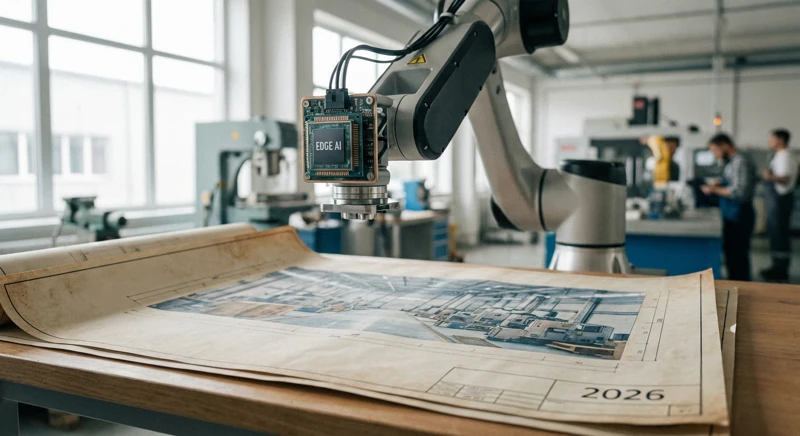
Prototyping next-gen manufacturing involves the strategic integration of Edge AI with custom automation solutions, typically on a smaller scale, to test and validate novel applications for 2026 production floors. This approach aims to create highly intelligent, flexible, and efficient systems that can adapt to evolving market demands and technological advancements.
At its core, it’s about bringing advanced machine intelligence closer to the point of action, reducing latency, and enabling real-time decision-making for enhanced operational control. This synergy empowers manufacturers to solve complex, future-oriented challenges that traditional automation simply can't handle.
What makes edge AI & custom automation essential for 2026?
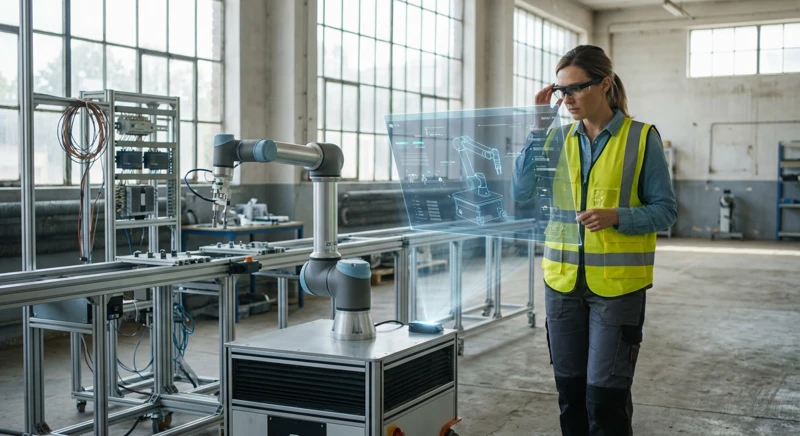
The manufacturing landscape is shifting faster than ever. Are your systems keeping pace? The pressure on manufacturers to deliver personalized products at scale, maintain peak efficiency, and quickly adapt to disruptions is intense. This isn't just about incremental improvements; it's about fundamentally rethinking how factories operate.
By 2026, the adoption of AI will be a non-negotiable competitive advantage. According to Gartner, over 80% of enterprises will have used AI in some capacity by 2026, with 70% of large organizations adopting AI-based solutions.
These aren't just theoretical numbers; they underscore a practical necessity. The combination of Edge AI processing power and bespoke automation systems provides the intelligence and flexibility required to thrive in this new era.
The manufacturing shift: why now?
You know the feeling: global competition is fierce, customer demands for unique products are skyrocketing, and operational resilience is no longer a luxury but a baseline requirement. Traditional automation, while foundational, often struggles to adapt to these rapid shifts. It excels at repetitive tasks but falters when flexibility, real-time optimization, or intricate decision-making is needed.
This is where the shift towards more intelligent, agile systems becomes critical. Manufacturers aren't just looking for speed; they're looking for smarts. According to McKinsey's Technology Trends Outlook 2024, the convergence of advanced AI and industrial IoT is a major accelerator for this transformation.
Here’s why traditional approaches are falling short:
- Rigidity: Hard-coded automation struggles with product variations or process changes.
- Latency: Cloud-only AI introduces delays, making real-time adjustments difficult.
- Data Overload: Too much raw data without local intelligence can swamp central systems.
- Security Concerns: Sending all sensitive factory data to the cloud raises eyebrows.
Edge AI: intelligence at the source
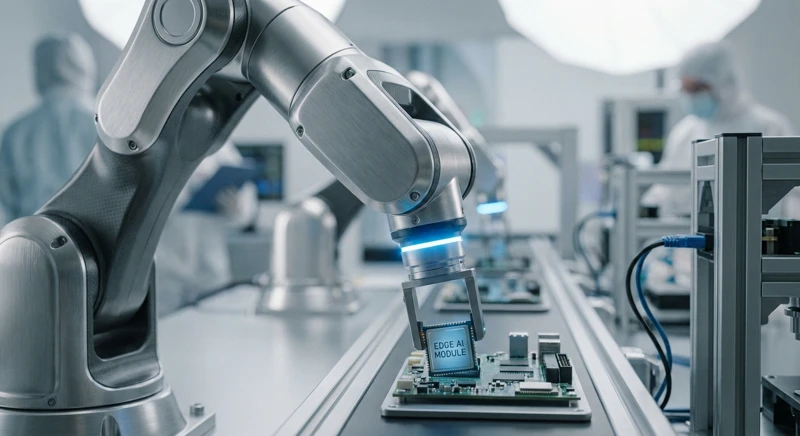
Imagine your production line making instant, intelligent decisions without waiting for external commands. That's the promise of Edge AI in manufacturing. It’s about embedding AI models directly into factory floor devices – cameras, sensors, robotic arms – allowing them to process data locally, in real-time. This drastically reduces the round-trip time to a central cloud server, minimizing latency to mere milliseconds. For example, a quality control camera can identify a defect and trigger an immediate rejection, not a delayed alert.
The benefits are tangible:
- Reduced Latency: Critical for high-speed processes where every millisecond counts.
- Enhanced Data Security: Sensitive production data stays on-site, within your control.
- Improved Bandwidth Efficiency: Only relevant insights, not raw data streams, need to be sent upstream.
- Real-time Decision-Making: Enables immediate adjustments to optimize processes or prevent failures, like in predictive maintenance.
In essence, Edge AI transforms factory equipment from simple executors into intelligent decision-makers, boosting efficiency and reliability.
Custom automation: beyond one-size-fits-all
Ever tried to fit a square peg in a round hole? That’s often what happens when you force a standard automation solution onto a unique manufacturing problem. Generic automation systems are great for common tasks, but they hit their limits quickly when you deal with bespoke products, intricate assembly, or highly specific material handling. This is where custom automation shines.
Custom solutions are engineered from the ground up to address your exact workflow, unique product lines, or complex factory layouts. They integrate flawlessly with your existing infrastructure, ensuring maximum efficiency and minimal disruption. Think about a custom automated nest-based filling line for a bespoke primary drug container – a challenge a standard machine couldn't even begin to tackle, as shown in a case study from 3P Innovation.
The key advantages:
- Precision: Engineered to the exact specifications of your product or process.
- Integration: Designed to work seamlessly with existing equipment and unique factory layouts.
- Problem Solving: Addresses unique production bottlenecks or quality challenges that off-the-shelf solutions can’t.
- Competitive Edge: Creates proprietary efficiencies that competitors can’t easily replicate.
To learn more about tailoring automation to unique regulatory environments, check out our guide on niche compliance automation 2026: bespoke systems for unmatched efficiency.
🤯 Mind Blown Moment: While 80% of enterprises will use AI by 2026, most will start with off-the-shelf solutions. Focusing on custom automation with Edge AI in your prototyping gives you an early-mover advantage for truly differentiated, optimized processes.
How to start prototyping your future factory floor
Feeling overwhelmed by all the buzz? Most people do. Starting your journey into Edge AI and custom automation doesn't have to be a multi-million-dollar gamble. The secret? Think small, start smart, and iterate fast. Prototyping isn't about building the entire future factory at once; it's about disciplined experimentation and learning.
The trend is clear: by 2026, 40% of enterprise applications will feature task-specific AI. This means highly focused, actionable AI, not vague, all-encompassing solutions. This aligns perfectly with a prototyping mindset.
Identify your pilot project
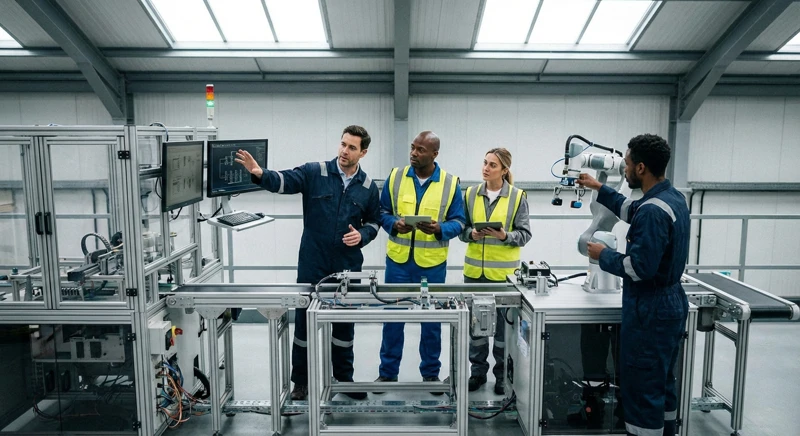
Where's the biggest headache on your production floor? That's usually your best starting point. Don't chase the flashiest tech; solve a real, tangible problem. A pilot project should be manageable in scope, have clear, measurable KPIs, and ideally, provide quick wins to build internal momentum.
Consider these areas for your first foray:
- Quality Inspection: Deploy an Edge AI vision system to automatically detect defects on a specific product line.
- Predictive Maintenance: Monitor a critical machine component with Edge AI to predict failures before they happen.
- Material Handling: Automate a repetitive, ergonomically challenging, or slow material transfer task with a custom robotic arm.
- Process Optimization: Use Edge AI to analyze real-time sensor data and suggest micro-adjustments to improve throughput or energy efficiency.
Selecting a focused problem helps you define success metrics, manage expectations, and get buy-in across the organization. For example, if you're in medical device manufacturing, a pilot could focus on automating a specific compliance check. We covered similar insights in our guide on 2026 medical device automation: custom solutions for elite compliance & innovation.
Choosing the right tech stack
This is where many stumble. The "right" tech stack isn't about having the newest gadgets; it's about synergy. You need Edge AI hardware that can handle your chosen models (think ruggedized industrial PCs or specialized AI accelerators like the IBM Spyre Adapter mentioned in IBM Redbooks), and automation components that integrate seamlessly. Compatibility, scalability, and ease of integration are paramount.
Consider the following:
- Edge Devices: Look for industrial-grade, low-power hardware capable of on-device inference.
- AI Software: Choose frameworks and platforms that allow for easy deployment and management of your AI models at the edge.
- Automation Components: Whether it's custom robotics, conveyors, or specialized end-effectors, ensure they can communicate and respond to AI insights.
- Connectivity: Reliable industrial IoT (IIoT) connectivity (e.g., 5G, Wi-Fi 6, Time-Sensitive Networking) is crucial for data flow between edge devices.
The true magic happens when your custom automation perfectly understands and executes the real-time intelligence provided by your Edge AI. It’s a dance, not a solo act.
Building a prototype roadmap
You’ve picked your battleground and scouted your tools. Now, it's about strategy. A phased roadmap is your best friend. Start with a small-scale deployment, gather data, analyze performance, and iterate. This iterative cycle is where the real learning happens. In fact, a custom automated nest-based filling line for a bespoke primary drug container began as a pilot line, highlighting the power of phased development, according to 3P Innovation.
Key phases for your roadmap:
- Proof of Concept (PoC): Validate the core idea and technical feasibility.
- Pilot Project: Deploy a small, functional system in a controlled production environment.
- Evaluation & Iteration: Measure KPIs, collect feedback, refine the system, and optimize AI models.
- Scalable Deployment Plan: Outline how successful prototypes will be expanded across operations.
Don't forget the human element! Cross-functional teams involving engineering, IT, operations, and even marketing (to understand market needs for customization) are vital for a holistic approach. If you're tackling 2026 production bottlenecks, this roadmap is key to fixing your flow. You can learn more in our guide on 2026 production bottleneck solutions: fix your flow & boost output.
🔥 Hot Take: Most companies overspend on "AI strategy" and underspend on actual prototyping. In 2026, the real competitive edge won't come from having an AI vision, but from the lessons learned by actually building and breaking things in a controlled environment.
Navigating challenges and maximizing results
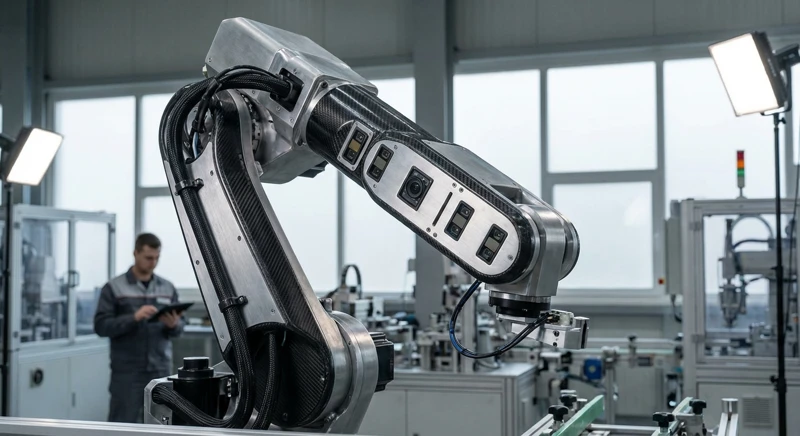
So, you’ve got a plan. But what about the inevitable bumps in the road? Let's be honest, every innovative project faces hurdles. The manufacturing industry itself faced a challenging economic environment in 2025, with costs rising and employment falling, as noted in the Deloitte 2026 Manufacturing Industry Outlook. This backdrop makes smart, resilient implementation even more crucial.
The good news is that by being aware of common pitfalls, you can proactively navigate them. The goal is to maximize the transformative results that Edge AI and custom automation promise, without falling victim to the hype cycle.
The agentic AI paradox: promise vs. peril
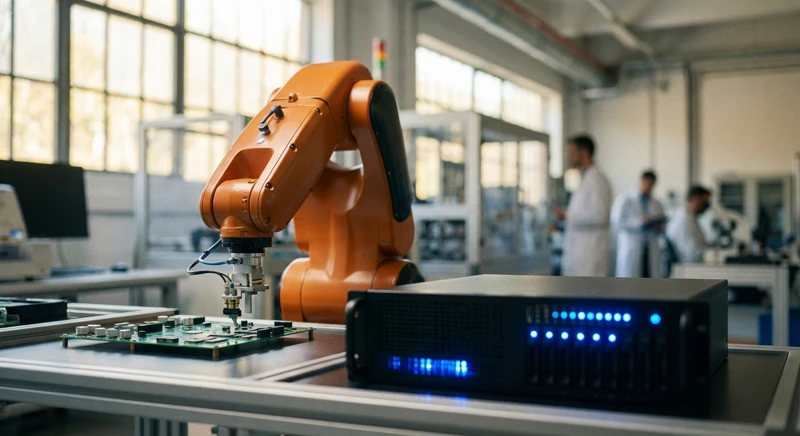
Agentic AI, the idea of autonomous AI systems that can learn, plan, and execute complex tasks, is undoubtedly exciting. It promises a future where AI can autonomously resolve 80% of issues within its scope. However, there's a paradox: Gartner predicts that over 40% of agentic AI projects may be canceled by the end of 2026.
Why the high failure rate? Often, it's due to:
- Scope Creep: Trying to do too much, too soon.
- Unrealistic Expectations: Believing AI is a magic bullet for all problems.
- Integration Issues: Difficulty making complex AI systems play nice with legacy OT.
- Data Quality: Lack of clean, relevant data to train and sustain agentic models.
The antidote is a focus on task-specific AI. Instead of building an all-knowing factory brain, aim for an Edge AI system that excels at one precise task, like defect detection or tool wear prediction. Get that right, then expand.
Real-world prototyping examples
So, what does this look like in practice? It's not science fiction anymore:
- Automated Vision for Weld Inspection: An Edge AI system deployed on the production floor uses high-resolution cameras to inspect every weld seam in real-time. It identifies micro-cracks or inconsistencies that human eyes might miss, triggering immediate alerts or robotic rework.
- Custom Robotic Palletizing for Irregular Loads: For products with variable sizes or shapes, a custom-engineered robotic arm, guided by Edge AI, learns optimal stacking patterns on the fly, maximizing pallet density and reducing manual labor.
- AI-Driven Energy Optimization: Edge devices monitor energy consumption across various machinery. The AI analyzes patterns and recommends real-time adjustments to reduce consumption without impacting production schedules.
These examples highlight focused applications where custom automation provides the physical capability and Edge AI delivers the necessary real-time intelligence for immediate impact.
Infrastructure and talent needs
Implementing Edge AI and custom automation isn't just about software; it's a foundational shift. You'll need a robust infrastructure and the right talent. Think of it as investing in your future operational readiness.
| Area | Requirements | Impact |
|---|---|---|
| Network Infrastructure | High-bandwidth, low-latency industrial network (e.g., 5G, Wi-Fi 6, TSN) for edge device communication. | Enables real-time data transfer and command execution for AI. |
| Data Management | Strategies for data collection, storage, labeling, and governance, especially for training AI models. | Feeds accurate, reliable data to AI; ensures compliance. |
| Skilled Personnel | Data scientists, automation engineers, IT/OT convergence specialists, and skilled operators. | Designs, implements, and maintains complex intelligent systems. |
This isn't just about hiring a data scientist; it's about upskilling your existing workforce and fostering a culture of continuous learning. Your operators, for instance, become collaborators with these advanced systems. Consider how this impacts our guide on operator-focused automation: boost production floor efficiency & innovation (2026) for insights on engaging your team. Investing in these areas now sets you up for long-term success.
Manufacturing Scenario Simulator
Curious about the potential impact of Edge AI and custom automation on your factory floor? This simulator will give you a ballpark idea of how improving key metrics can translate into tangible gains. It's a quick way to visualize the "what if" scenarios that intelligent automation unlocks.
Prototype Your Impact: Edge AI ROI
Enter your current manufacturing metrics below to see how optimizing with Edge AI and custom automation could improve your bottom line.
Why it matters: High defect rates mean wasted materials, rework costs, and unhappy customers. AI's precision can cut this down dramatically.
Why it matters: This helps calculate the financial impact of reducing defects and improving throughput. Every penny saved per unit adds up.
Why it matters: Scale is everything. Small improvements on high volumes yield massive returns. Think about what a 1% gain here means.
Why it matters: This is where Edge AI shines! Even a conservative reduction can dramatically cut waste and increase sellable products.
Your Prototype Impact: Massive Potential!
Here’s what custom automation with Edge AI could do for your operations:
Bottom line: Even small, focused AI implementations can unlock significant savings and boost output. Imagine what a comprehensive strategy could achieve.
Key Sources & Trust
We believe in transparency and verifiable information. Here are the primary sources that informed this article, along with their trust scores based on authority and research depth.
| # | Source | Trust Score | Key Insight | Link |
|---|---|---|---|---|
| 1 | Gartner | 55/100 | Predictions on enterprise AI adoption & agentic AI project cancellations by 2026. | View Source |
| 2 | McKinsey & Company | 65/100 | Overview of technology trends and the evolving manufacturing landscape. | View Source |
| 3 | Kodexo Labs | 50/100 | Prediction on task-specific AI in enterprise applications by 2026. | View Source |
| 4 | 3P Innovation | 50/100 | Case study on developing a custom fill-finish pilot line. | View Source |
| 5 | Deloitte Insights | 50/100 | Outlook on the challenging economic environment for manufacturing in 2025. | View Source |
| 6 | IBM Redbooks | 65/100 | Technical reference on AI hardware, relevant for Edge AI devices. | View Source |
Frequently Asked Questions
Prototyping is critical because it allows manufacturers to test new Edge AI and custom automation concepts in a controlled environment before full-scale deployment. This minimizes risks, validates potential ROI, and ensures seamless integration with existing systems, crucial for adapting to rapid technological shifts towards 2026.
Edge AI processes data directly on devices on the factory floor, minimizing latency and improving real-time decision-making for tasks like quality control or predictive maintenance. Traditional cloud AI sends data to remote servers, which can introduce delays, making it less suitable for time-critical industrial applications.
Custom automation is tailored precisely to unique production processes, product lines, and factory layouts, offering unparalleled efficiency and optimization. Unlike generic solutions, it can address niche challenges, integrate seamlessly with proprietary systems, and deliver a more significant competitive advantage.
Successful implementation requires a multidisciplinary team. Key skills include data science for AI model development, automation engineering for custom robotics and systems, IT/OT convergence expertise for integration, and strong project management to navigate complex prototyping phases effectively.
To mitigate risks, focus on well-defined, 'task-specific AI' pilot projects with clear objectives and manageable scope. Emphasize continuous iteration, robust data governance, and cross-functional collaboration. Realistic expectations and a phased deployment approach are crucial to avoid common pitfalls.
Data is the lifeblood of edge AI. High-quality, real-time data from sensors and machines is essential for training accurate AI models, enabling predictive maintenance, optimizing processes, and ensuring quality control. Robust data collection and management strategies are foundational for any successful deployment.
Start by identifying a single, high-impact problem area in your production, like quality inspection or specific bottleneck. Begin with a small-scale pilot project, collaborating with a specialized automation partner to leverage their expertise and gradually expand successful solutions.
Ready to transform your factory floor?
The future isn't waiting. If you're ready to stop guessing and start building a genuinely intelligent, custom-tailored manufacturing operation for 2026, we're here to help you navigate the complexities and unlock real-world results.
Let's prototype your successRelated Posts
Operator-centric automation: boost efficiency & innovate production in 2026
Boost manufacturing automation efficiency in 2026 with operator-centric automation. Drive peak performance & breakthrough innovation.
Fixed-price automation projects: predictable roi for european manufacturing 2026
European manufacturers: unlock predictable ROI with fixed-price automation projects in 2026. Learn how to manage costs and drive innovation.
Edge AI and custom automation: how to explore the future of European manufacturing in 2026
Discover how European manufacturers can leverage Edge AI and custom automation in 2026 to innovate, optimize production, and achieve breakthroughs.