Niche compliance automation 2026: bespoke systems for unmatched efficiency
Ever felt like you're trying to fit a square peg of niche compliance into the round hole of generic automation software? You're not alone.
For specialized manufacturers and highly regulated industries, the compliance landscape in 2026 isn't just evolving; it's practically shape-shifting. One-size-fits-all solutions are increasingly irrelevant, barely scratching the surface of what's truly needed. It's time to stop patching problems and start building solutions that actually fit.
This isn't about simply adding a new tool; it's about crafting a bespoke system designed to meet your unique demands, reduce risk, and drive efficiency in ways generic platforms can only dream of. Get ready to discover how tailored automation can transform your compliance headaches into a competitive advantage.
Table of Contents
The evolving compliance puzzle in 2026
The regulatory landscape is a minefield, especially in niche industries. Generic solutions? They’re practically bringing a butter knife to a sword fight.

Let's be honest: compliance has always been a beast. But in 2026, it's grown a few extra heads, especially for specialized manufacturers. The complexity isn't just increasing; it's becoming hyper-specific, demanding an intimacy with regulations that off-the-shelf software simply can't provide.
You know the drill: countless hours spent manually verifying, documenting, and praying an auditor doesn't find that one missed checkbox. It’s exhausting, inefficient, and frankly, a massive business risk.
Why one-size-fits-all doesn't work
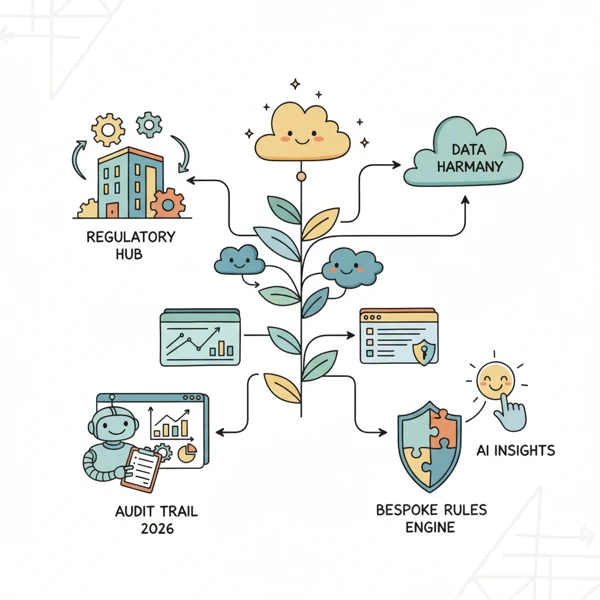
Imagine trying to navigate the highly regulated medical device industry with a generic ERP system. It's like trying to perform delicate surgery with a blunt instrument. Generic automation platforms, while great for broad business processes, often fall flat when confronted with the intricate, industry-specific demands of niche compliance.
Here's why they inevitably miss the mark:
- Lack of granular control: Niche regulations often require micro-level data tracking, specific approval workflows, and unique audit trail structures that generic systems just don't offer out-of-the-box.
- Integration nightmares: Trying to force a generic platform to play nice with legacy systems and specialized equipment often leads to expensive, clunky integrations that break easily.
- Generic reporting: Auditors don't want broad strokes; they want precise, verifiable data presented in formats specific to their regulatory framework. Generic reports rarely cut it.
- Inadequate risk profiling: Each niche has its own risk profile. A generic solution can't understand or proactively mitigate the unique vulnerabilities inherent to, say, pharmaceutical manufacturing versus aerospace component production.
Key regulatory shifts impacting niche sectors
The year 2026 marks some significant shifts, especially in medical device compliance. If you're in this sector, you've probably been holding your breath for the FDA's new Quality Management System Regulation (QMSR)[5].
Effective February 2, 2026[1], the QMSR dramatically updates the device current good manufacturing practice (CGMP) requirements. The big news? It incorporates by reference the quality management system requirements of ISO 13485:2016[2]. This isn't just a tweak; it’s a full paradigm shift toward harmonized international standards.
Another crucial change? The FDA stopped using the Quality System Inspection Technique (QSIT) for device inspections on the same date. Instead, they've transitioned to the new Inspection of Medical Device Manufacturers Compliance Program: 7382.850[3]. This means a different approach to how your compliance is evaluated, requiring more robust and integrated systems, not just a checklist mentality.
Then there's the ever-present tightrope walk between device servicing and remanufacturing[4]. The FDA continues to emphasize the clear distinction and strict regulation of each. Misinterpretations here can lead to significant penalties, costly recalls, and reputational damage. Knowing whether you're performing routine maintenance or actually changing a device's performance characteristics is critical.
The growing need for expert guidance
These shifts aren't just minor adjustments; they represent a fundamental change in how compliance is approached. Without specialized knowledge, navigating this labyrinth is a fool's errand. This is where the concept of a "professional engineer" truly comes into its own.
"The practice of professional engineering includes any professional service or creative work requiring special knowledge of the mathematical and physical sciences and the engineering disciplines as applied to the design, construction, evaluation, inspection, and management of such services and creative work."
— Board of Professional Engineers, Land Surveyors, and Geologists, Governing Body[7]
This isn't about general IT support; it's about leveraging deep engineering expertise to design systems that inherently meet complex regulatory demands. You need partners who speak the language of your niche, understand the nuances of QMSR, and can translate that into an automated, bulletproof compliance blueprint.
Building your bespoke compliance blueprint
Ready to ditch the compliance chaos? Let's talk about building a system that actually works for your unique world.

Getting started with custom automation can feel daunting, but it doesn't have to be. The key is to start with a meticulously crafted blueprint, not a scattergun approach. This process ensures your investment delivers exactly what you need, without the bloat of generic systems.
Identify your unique compliance requirements

Before you even think about software, you need to dissect your existing workflows and regulatory obligations. This isn't just about reading a rulebook; it's about understanding how those rules interact with your daily operations.
Start by asking:
- What specific regulations govern your products/processes? (e.g., QMSR, ISO 13485, industry-specific quality standards).
- Where are your current compliance bottlenecks? (e.g., manual data entry, approval delays, inconsistent documentation).
- What data needs to be captured, stored, and reported? Consider data integrity, security, and audit trail requirements.
- Which operational steps require verification or oversight? Think about quality checks, maintenance logs, and personnel training records.
A deep dive into these questions forms the bedrock of a truly effective bespoke system.
Mapping needs to automation capabilities
Once you have a clear picture of your needs, the next step is to translate them into automation capabilities. This is where the magic of custom design truly shines. For instance, if your challenge is ensuring data integrity for audit trails, a bespoke system can:
- Implement Computer Software Assurance (CSA)[6] compliant data entry and validation protocols.
- Automate real-time logging of all changes, creating an immutable, timestamped record.
- Integrate directly with production equipment to capture operational parameters without human intervention.
- Generate auditor-ready reports with a single click, fulfilling specific regulatory formats.
The trick is to match each challenge with a tailored automation feature, creating a seamless, compliant workflow. This isn't about generic RPA; it's about intelligent, purpose-built automation.
Common mistakes to avoid upfront
Even with the best intentions, businesses often stumble when pursuing automation. Steering clear of these pitfalls is crucial for success:
- Underestimating complexity: Niche compliance is inherently complex. Don't assume an "easy button" exists. Acknowledge the intricacies and plan accordingly.
- Ignoring integration: Your new system won't live in a vacuum. Failing to plan for seamless integration with existing software, hardware, and data sources is a recipe for headaches.
- Inadequate testing: Comprehensive testing, including stress tests and simulated audit scenarios, is non-negotiable. Don't rush this phase.
- Excluding compliance teams: Your compliance experts must be involved from day one. They are the gatekeepers of your regulatory adherence, and their input is invaluable.
- Choosing the wrong technology: Not all automation technologies are created equal. A partner with deep expertise can guide you to the right stack for your specific challenges.
The value of specialized partnership
Navigating these waters alone is tough. That's why choosing a partner with deep niche industry knowledge and proven automation expertise is invaluable. They can help you define your needs, design the right system, and avoid the common pitfalls, turning a complex project into a streamlined success.
I put together a detailed PDF that covers the nuances of integrating custom automation with existing infrastructure in highly regulated sectors – grab it here.
Bespoke automation's measurable impact
So, what's in it for you? Beyond peace of mind, custom automation delivers tangible results where it truly counts: efficiency, risk reduction, and ROI.

It's one thing to talk about compliance; it's another to demonstrate its value to the bottom line. Bespoke automation isn't just a cost center; it's a strategic investment that pays dividends through streamlined operations and robust risk management.
Boosting efficiency: the automation advantage

The truth is, manual compliance tasks are incredibly time-consuming. Imagine your team spending less time on data entry and more on innovation. That's the automation advantage.
Custom automation specifically for niche compliance can:
- Automate data collection: Directly pull data from machinery, sensors, and existing databases, eliminating manual input errors.
- Streamline approval workflows: Digitalize and accelerate multi-stage approvals, ensuring prompt sign-offs while maintaining auditability.
- Generate real-time insights: Provide dashboards and reports that give you an immediate pulse on your compliance status, identifying issues before they escalate.
- Reduce audit preparation time: With comprehensive, automatically generated audit trails and reports, you'll be audit-ready 24/7, slashing weeks of preparation down to days or even hours.
This operational agility isn't just a convenience; it's a competitive edge.
Mitigating risk with intelligent systems
Compliance isn't just about following rules; it's fundamentally about managing risk. A single lapse can lead to colossal fines, product recalls, and irreparable damage to your brand. Custom automation turns your compliance efforts into a proactive shield.
- Consistent adherence: Automation ensures every process step follows regulatory guidelines, eliminating inconsistencies inherent in manual work.
- Enhanced data integrity: By reducing human touchpoints, custom systems drastically minimize the risk of data manipulation or accidental corruption.
- Proactive breach identification: Intelligent systems can monitor for deviations from acceptable parameters, flagging potential compliance breaches in real-time before they become critical.
- Impenetrable audit trails: Every action, every change, every approval is logged and securely stored, providing an undeniable record for auditors.
As professional engineers emphasize, effective risk mitigation requires a systematic approach.
"All persons who shall practice or offer to practice civil, electrical, mechanical, or structural engineering in this state, or shall use the title 'engineer' in any way in this state, in connection with any branch of engineering, shall be registered in accordance with the provisions of this chapter."
— Board of Professional Engineers, Land Surveyors, and Geologists, Governing Body[7]
This highlights the core idea: specialized knowledge, applied systematically, is the foundation for managing complex operations and compliance.
Quantifying your ROI: tangible benefits
Let's talk numbers. While specific ROI varies, businesses in niche sectors consistently see significant returns from bespoke compliance automation:
| Benefit Area | Typical Impact |
|---|---|
| Reduced Manual Labor Costs | Significant reduction in person-hours spent on documentation, verification, and reporting, freeing up skilled personnel for higher-value tasks. |
| Avoided Non-Compliance Penalties | Minimization of fines and legal costs associated with regulatory breaches. These can run into millions for serious violations. |
| Faster Time-to-Market | Accelerated product approval processes and launch timelines due to robust, audit-ready compliance documentation. |
| Improved Operational Uptime | Fewer disruptions from compliance issues, audits, or corrective actions, leading to more consistent production. |
Think about the compounded effect: fewer errors means less rework, faster approvals means quicker revenue, and reduced risk means avoiding catastrophic financial hits. This isn't just about saving money; it's about protecting and growing your business.
Expert perspective on effective automation
Deploying effective automation for compliance requires more than just coding; it requires engineering discipline. It's about applying scientific and mathematical principles to design solutions that are reliable, predictable, and compliant by design.
In my experience, the truly successful automation projects are those led by teams who not only understand the technology but also have a deep appreciation for the underlying engineering principles and regulatory frameworks of the niche industry. It's not just about automating a process, but automating it correctly and reliably every single time.
Comparing smart automation to alternatives
Generic solutions are like trying to wear someone else's shoes — they might technically work, but they're never a perfect fit. And manual processes? That's just walking barefoot through the compliance desert.

When you're dealing with the intricate web of niche compliance, the choice of automation strategy isn't just a preference; it's a critical business decision. Let's stack bespoke automation against the alternatives to see why it consistently comes out on top.
Bespoke vs. Generic: what's the real difference?

It boils down to control and precision. Generic automation software, while feature-rich, is designed for the masses. It operates on a lowest-common-denominator principle, meaning it will always lack the depth and specificity required for truly rigorous niche compliance.
Here’s a quick comparison:
| Feature | Generic Automation | Bespoke Automation |
|---|---|---|
| Regulatory Adherence | Broad compliance features; often requires manual workarounds for niche rules. | Precision-engineered to exact niche regulatory standards (e.g., QMSR, ISO 13485:2016). |
| Integration with Legacy Systems | Limited, often requires complex APIs or data exports, prone to errors. | Seamless, custom-built integration with existing and legacy systems. |
| Scalability & Flexibility | Scales well within its predefined framework; customization is difficult. | Built to scale with your specific growth, easily adaptable to evolving regulations. |
| Cost Structure | Subscription-based, predictable; but hidden costs in workarounds and lack of fit. | Higher initial investment, but lower total cost of ownership due to perfect fit and efficiency. |
Why custom automation is the smarter choice
When you choose bespoke automation, you're not just buying software; you're investing in a strategic asset. This is where you gain true control over your compliance posture and operational efficiency.
Key advantages include:
- Unmatched accuracy: Eliminate human error in data collection, processing, and reporting.
- Auditor confidence: Present clear, concise, and verifiable audit trails that meet and exceed regulatory expectations.
- Proactive compliance: Implement AI-powered monitoring to detect anomalies and potential issues before they become liabilities.
- Operational harmony: A system designed for your specific workflows rather than forcing your workflows to adapt to the software.
For more insights on specialized manufacturing and automation, check out our guide on 2026 production bottleneck solutions: fix your flow & boost output.
Integrating with your existing systems
One of the primary concerns for niche industries, particularly those with long-standing operations, is how new automation will integrate with legacy systems. The beauty of custom automation is its ability to be built with your existing infrastructure in mind.
Experts like Ascential understand this intimately. They work with clients to integrate automation into workflows for medical devices and life science products, modernizing aspects like robotics, conveyors, sensors, and control systems. They tailor solutions directly to product type, volumes, and those all-important regulatory requirements, ensuring that new systems enhance, rather than disrupt, your current operations.
This ensures a smooth transition and minimizes downtime, a crucial factor in continuous production environments.
Choosing your automation path
The choice is clear: for niche compliance, bespoke automation isn't just an option; it's a strategic imperative. It's about building a future-proof system that truly understands and adapts to your unique challenges. If you're keen to dive deeper into how medical device manufacturing is evolving with automation, you'll find more in our guide on 2026 medical device automation: custom solutions for elite compliance & innovation.
Niche compliance readiness calculator
Curious where your business stands in the ever-shifting sands of 2026 compliance? Take our quick assessment to find out your automation readiness score and get personalized insights!
Assess Your Niche Compliance Automation Readiness
Answer a few questions to get a snapshot of your current compliance automation posture and identify key areas for improvement.
What's next for you?
Key sources & trust
Transparency is key. Here's a quick reference to the authoritative sources and research that informed this deep dive into niche compliance automation.
| # | Source | Trust Score | Key Insight | Link |
|---|---|---|---|---|
| 1 | FDA.gov | 85/100 | QMSR effective date, official Q&A | FDA QMSR FAQ |
| 2 | Morgan Lewis | 60/100 | QMSR compliance deadline, ISO 13485:2016 incorporation | Morgan Lewis QMSR Ready |
| 3 | FDA.gov | 85/100 | New FDA Medical Device Manufacturers Compliance Program (7382.850) | FDA Compliance Program |
| 4 | FDA.gov | 85/100 | Distinction between medical device servicing and remanufacturing | FDA Servicing/Remanufacturing |
| 5 | FDA.gov | 85/100 | Overview of Quality Management System Regulation (QMSR) | FDA QMSR Overview |
| 6 | FDA.gov | 85/100 | Guidance on Computer Software Assurance for production and quality systems | FDA Computer Software Assurance |
| 7 | CA.gov | 95/100 | Definition and practice of professional engineering | CA Professional Engineers Act |
| 8 | Ascential MLS | 50/100 | Custom medical device manufacturing automation capabilities | Ascential Custom Automation |
Frequently asked questions
Generic solutions often lack the specificity to address the unique regulatory nuances, operational complexities, and data integrity requirements of niche industries. They're built for broad appeal, not deep, industry-specific adherence, leading to gaps in compliance, manual workarounds, and increased risk.
The major shift is the FDA's new Quality Management System Regulation (QMSR), effective February 2, 2026, which incorporates ISO 13485:2016. This, alongside updated FDA inspection programs and stricter distinctions between device servicing and remanufacturing, demands highly tailored compliance strategies.
Custom automation provides consistent, automated enforcement of regulatory protocols, minimizes human error, ensures immutable audit trails, and offers real-time monitoring to proactively identify and address potential compliance breaches. It’s about building in compliance from the ground up, not patching it on.
While exact figures vary, bespoke automation typically leads to significant ROI through reduced manual labor costs, fewer non-compliance penalties, improved audit readiness, faster time-to-market for new products, and enhanced operational uptime. Think of it as investing in future-proofing your business.
Absolutely. A key advantage of custom solutions is their ability to integrate seamlessly with your current infrastructure, including legacy systems. This avoids costly rip-and-replace scenarios, preserving historical data and maintaining operational continuity while enhancing compliance capabilities.
The FDA draws a clear line. 'Servicing' generally involves maintenance or repair to return a device to its original specification. 'Remanufacturing' involves significant changes to a finished device's performance, safety specifications, or intended use, essentially creating a new device subject to stricter regulations. Bespoke automation helps navigate these complex distinctions.
Begin by thoroughly identifying your unique compliance requirements and operational workflows. Then, map these needs to specific automation capabilities, paying close attention to data integrity, audit trails, and cybersecurity. Partnering with an expert who understands both your niche industry and advanced automation is crucial for success.
Ready to transform your compliance?
Stop letting generic solutions dictate your compliance strategy. It's 2026, and your niche demands a bespoke approach that delivers unmatched efficiency and iron-clad risk mitigation. Let's build something truly exceptional for your business.
Let's craft your custom solutionRelated Posts
Operator-centric automation: boost efficiency & innovate production in 2026
Boost manufacturing automation efficiency in 2026 with operator-centric automation. Drive peak performance & breakthrough innovation.
Fixed-price automation projects: predictable roi for european manufacturing 2026
European manufacturers: unlock predictable ROI with fixed-price automation projects in 2026. Learn how to manage costs and drive innovation.
Edge AI and custom automation: how to explore the future of European manufacturing in 2026
Discover how European manufacturers can leverage Edge AI and custom automation in 2026 to innovate, optimize production, and achieve breakthroughs.