Operator-focused automation: Boost production floor efficiency & innovation (2026)
You know that feeling when you're wrestling with a clunky, overly complex piece of software or machinery that seems determined to make your job harder, not easier? Now imagine that on a factory floor, multiplied by dozens of operators, every single day. That's the frustrating reality many manufacturers face with traditional automation.
But here's the twist: the future isn't about eliminating humans from the equation. It's about designing automation that makes them ridiculously good at what they do. We're talking about an evolution that moves beyond simply automating tasks to genuinely empowering your workforce, boosting efficiency, and sparking innovation like never before. Welcome to the era of operator-focused automation, where your production floor isn't just smart, it's brilliant.
Table of Contents
The next leap: operator-centric automation
Forget Industry 4.0; the real game-changer is how we interact with our intelligent machines.
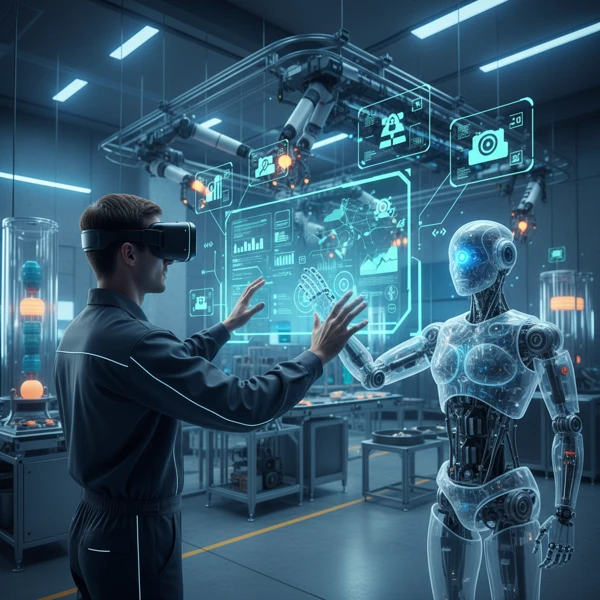
For years, the promise of Industry 4.0 revolved around connectivity and data, pushing towards "lights-out" factories. While impressive, this approach often overlooks a critical factor: the human element. The next logical evolution, often dubbed Industry 5.0, brings the operator back into the spotlight, focusing on solutions that truly augment human capabilities and intuition. This is the heart of operator-focused automation.
It’s not just about automating a task; it's about designing that automation with the human operator in mind[1]. We’re talking about systems that are intuitive, easy to learn, and seamlessly integrated into the human workflow. This shift directly addresses the limitations of traditional automation, which often created new headaches instead of solving old ones.
Why traditional automation falls short
Traditional automation, while powerful, often comes with a secret handshake only a few truly understand. It's built for machines, by engineers, and sometimes, the poor operator is left to decipher a cryptic interface and navigate a steep learning curve. Sound familiar?
Here are the common pain points that can quickly turn a shiny new automation system into a factory floor frustration:
- Steep Learning Curves: Complex interfaces demand extensive training, eating into productivity and often requiring constant refreshers.
- High Error Rates: Confusing systems inevitably lead to human errors, from incorrect inputs to missed alarms, resulting in rework and scrap.
- Resistance to Adoption: If a system feels like a hindrance rather than a help, operators will find workarounds, negating its benefits.
- Generic Solutions Miss the Mark: Off-the-shelf automation rarely accounts for your specific product variations, unique process steps, or regulatory demands.
These issues don't just slow things down; they contribute to the ongoing, hidden cost of human error, which we'll dive into shortly. Simply put, generic solutions aren't cutting it for the unique, specialized challenges of modern manufacturing.
Hot Take: Most automation failures aren't technical; they're human. If your operators aren't embracing the tech, it's not a people problem—it's a design problem. Prioritize intuition over brute-force efficiency.
Introducing the operator-centric philosophy
So, what does operator-centric automation actually look like? It’s a shift in mindset, designing systems where human-machine collaboration is not just possible, but delightful. This means:
- Intuitive Interfaces: Think smartphone-simple, industrial-strength controls. Interfaces that operators can grasp quickly, reducing cognitive load and training time.
- Seamless Integration: Your automation systems shouldn’t just talk to each other; they should also understand the human context of the production process.
- Augmenting Capabilities: Empowering the workforce, not replacing them. Systems should act as intelligent co-pilots, providing real-time data, predictive insights, and assistance without taking over essential human judgment.
- Minimizing Retraining Needs: Design so elegant that new operators can get up to speed faster, thanks to embedded guidance and logical workflows, as highlighted by research on human performance optimization[1].
This approach leads to tangible benefits: reduced downtime because troubleshooting is faster, fewer errors thanks to clear feedback, and a generally happier, more productive workforce. We at PRIMATRONIC believe that when operators feel empowered and understand their tools, they unlock unforeseen levels of productivity and quality.
Beyond standard solutions
For those pushing the boundaries or operating in highly specialized sectors, standard automation is often just a starting point. Operator-centric design provides the framework to go further, allowing for the rapid prototyping and testing of radical new ideas. It's about finding partners who don't just sell you a box, but who are willing to explore and experiment with you to build truly bespoke solutions for your unique production needs. This adaptability is key to truly innovating the future of manufacturing operations.
Unlocking efficiency and innovation with intuitive design
Better interfaces don't just look pretty; they hit your bottom line harder than a rogue forklift.
Let's be brutally honest: you're not just buying automation for kicks. You're buying it for results – specifically, improved production floor efficiency and a clear path to innovation. Operator-centric design isn't a fluffy concept; it's a direct route to measurable gains.
The real cost of human error (and how to slash it)
Human error isn't just a nuisance; it's a silent killer of profits. Think rework, scrap, unforeseen downtime, safety incidents, and warranty claims. These "hidden manufacturing costs" can quickly erode your margins, as studies like those published by InTouch Monitoring highlight. It's a persistent challenge, even in highly automated environments, according to Pluto-MEN.com[2].
While no exact recent statistics are available for 2026 specifically, historical data suggests human error accounts for a significant portion of manufacturing inefficiencies. An intuitive, operator-focused system dramatically reduces these errors. Imagine:
- Fewer Misconfigurations: Clear visual feedback and guided processes prevent incorrect setup.
- Reduced Rework: Real-time quality control checks, often powered by custom vision systems, catch defects before they become costly.
- Lower Downtime: Simplified troubleshooting and predictive maintenance alerts empower operators to address issues proactively.
This translates directly into fewer unexpected equipment failures and bottlenecks, which every manufacturing operations manager dreams of. Plus, PRIMATRONIC's solutions are engineered to minimize retraining, slashing those soft costs even further.
Boosting throughput with better adoption
Ever installed a new system only to find operators reverting to their old ways? It happens all the time when technology is cumbersome. But when a system is genuinely easy to use, adoption rates soar. This isn't rocket science; it's just human nature.
The direct correlation between ease of use and operator adoption means:
- Smoother Workflows: Operators spend less time fighting the system and more time making product.
- Faster Cycle Times: Tasks are completed more quickly and consistently, driving up output.
- Increased Overall Production Efficiency: When operators embrace the tools, the entire line runs like a well-oiled machine.
This also creates fertile ground for rapid prototyping and testing of new ideas. If operators can quickly learn new machine sequences or system adjustments, you can innovate much faster without disrupting the entire line. For deeper dives on optimizing your flow, check out our guide on 2026 production bottleneck solutions: fix your flow & boost output.
Innovation sparks from empowered operators
When operators feel supported and understand their tools, something magical happens: they become innovators. They're the ones on the front lines, seeing the nuances, the tiny inefficiencies, and the opportunities for improvement that data scientists in an office might miss. An operator-centric approach fosters this kind of shop-floor innovation. This can manifest as:
- Suggesting Process Improvements: Operators become active participants in optimization, not just button-pushers.
- Identifying Novel Applications: They might spot how a custom vision system, currently used for defect detection, could also be repurposed for material tracking or assembly verification.
- Enhanced Predictive Maintenance: Operators empowered with intuitive data dashboards can interpret machine health, moving beyond basic alerts to genuinely understanding patterns, as discussed by Springer's research on industrial maintenance efficiency[3].
This human-machine synergy is where the real breakthroughs happen. Custom electronics enabling new forms of human-robot interaction or advanced vision systems aren't just technical marvels; they are tools that empower your team to think bigger.
Bridging the gap: Primatronic's approach
It's not just about what we build, it's about how we build it—together.
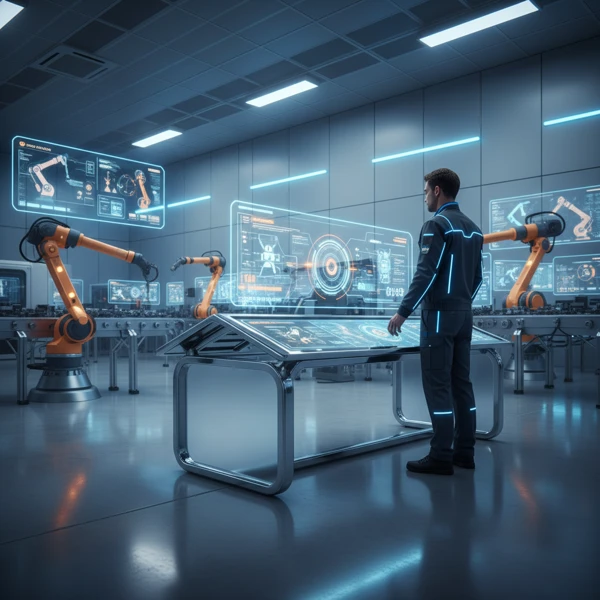
By now, you're probably thinking: "Okay, I get it. Operator-centric is the way to go. But how do I actually do it? And who can I trust to get it right, especially when my production line has more quirks than a vintage car rally?" That's precisely where PRIMATRONIC steps in. We've built our reputation on bridging the gap between cutting-edge technology and real-world operational needs.
Collaboration: building your ideal workflow
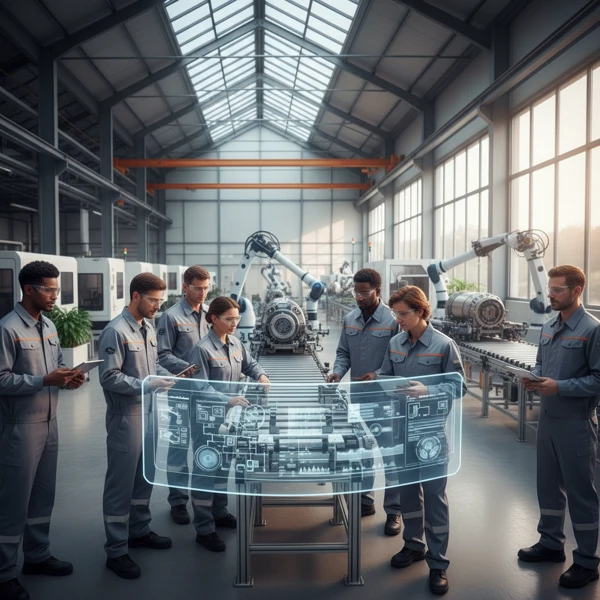
At PRIMATRONIC, we reject the one-size-fits-all model. We start with you, on your factory floor, to truly understand your unique challenges and, crucially, your operators' needs. This isn't just about technical specs; it’s about watching, listening, and learning from the people who actually run your machines every day.
Our collaborative process ensures:
- Deep Dive Assessments: We don't just ask about your problems; we immerse ourselves in your processes to uncover hidden pain points and opportunities.
- Custom Solution Design: Every solution is architected from the ground up to fit your specific workflow, not forced into a generic template. This includes integrated automation solutions that consider your existing MES/ERP systems.
- Operator Feedback Loops: We involve your team throughout the design and prototyping phases, ensuring the final system is intuitive and readily adopted.
This isn't just a service; it's a partnership to build your ideal workflow, ensuring the operator-focused design translates into measurable results.
Did You Know? The best automation isn't seen; it's felt. When operators can intuitively interact with a system, it fades into the background, allowing them to focus on the task, not the tool.
Prototyping radical new ideas with Primatronic
For innovation explorers and R&D specialists, the freedom to prototype and test radical new ideas is paramount. We provide that sandbox. Our modular automation architecture and expertise in advanced production floor design mean we can help you turn ambitious concepts into working realities, fast.
Whether you're exploring drone control simulation for R&D automation or integrating AR/VR environments for enhanced human-robot interaction, our team is equipped to support:
- Rapid Prototyping: Quickly test new concepts without committing to full-scale deployment.
- Cutting-Edge Integrations: From Siemens, Beckhoff, and Allen-Bradley systems to OPC-UA, MQTT, and Modbus integration, we handle the complexities.
- Future-Proof Architectures: We design for adaptability, ensuring your innovations can evolve with technology, addressing questions like cybersecurity for highly innovative, connected systems right from the start.
We're not just providing a service; we're enabling your next big breakthrough. For more on integrated solutions, check out our guide on Integrated Automation for European Manufacturing | 2026 Guide.
Tailored for niche demands
Niche industries—medical devices, precision engineering, advanced materials—have unique challenges. Regulatory demands, ultra-high quality standards, and specialized processes mean generic solutions are dead on arrival. PRIMATRONIC excels here.
Our operator-centric solutions are adaptable to:
- Specific Industry Regulations: We build systems that inherently comply with the stringent standards of your sector, such as those found in medical device manufacturing.
- Unique Production Needs: From bespoke vision systems for unique defect detection to precision robotics for delicate assembly tasks, we tailor everything.
- Guaranteed Quality Assurance: Our designs prioritize consistent, repeatable quality, reducing variation and ensuring compliance.
We understand that generic solutions simply don't cut it. That's why PRIMATRONIC is known for best practices in custom, operator-focused automation solutions across Europe. For an example, explore our guide on 2026 medical device automation: custom solutions for elite compliance & innovation.
Your path to a smarter, human-centric factory floor
The future of manufacturing isn't just automated; it's collaborative, intuitive, and ultimately, more human.
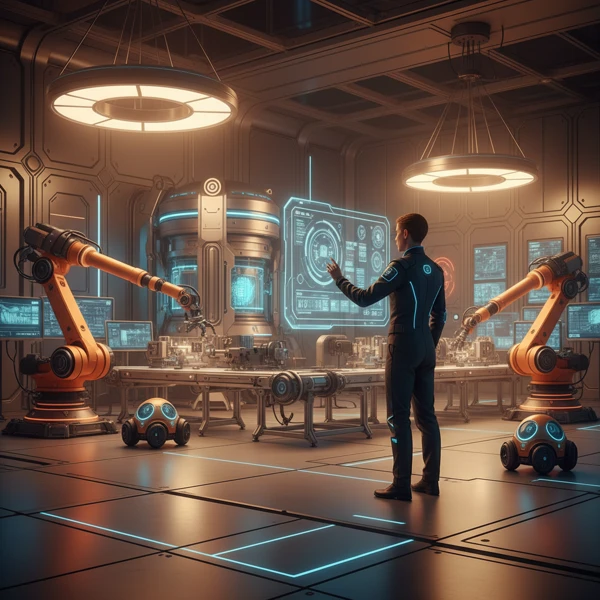
You’ve seen the frustrations of traditional automation and the transformative potential of an operator-centric approach. The question now isn't if you should transition, but how. It's about moving from a factory floor that simply processes orders to one that truly innovates and adapts.
Implementing operator-centric automation: a phased approach
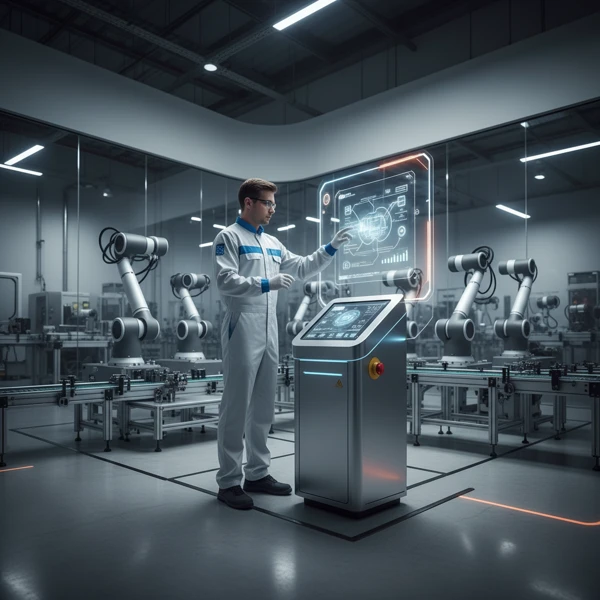
Making a shift to operator-centric automation doesn't have to be a rip-and-replace nightmare. A strategic, phased approach makes it manageable, allowing for continuous feedback and refinement:
- Start Small, Think Big: Identify a critical bottleneck or a highly manual process. Implement an operator-focused pilot project in this area.
- Measure and Learn: Collect data on efficiency gains, error reduction, and operator satisfaction from your pilot. This builds a strong business case.
- Refine and Scale: Use lessons learned to refine the solution and then strategically scale it to other areas of your production floor. This develops adaptable, learning systems over time.
- Integrate Gradually: Focus on integrating new operator-centric systems with existing infrastructure (MES, ERP, SCADA) in a modular fashion, avoiding massive overhauls.
This allows your team to adapt and embrace the new tools, fostering a culture of continuous improvement and human-machine synergy.
Assess Your Human-Automation Synergy
See how well your current automation empowers your operators. Answer a few quick questions to get your synergy score and actionable insights!
1. How quickly can a new operator become proficient with your core automation systems?
Insight: Steep learning curves dramatically increase training costs and time-to-productivity. Simpler interfaces mean faster onboarding.
The smart factory of tomorrow is here
The vision of the smart factory—where efficiency, precision, and agility reign supreme—isn't a distant dream for 2030. It's happening right now, in 2026. At its core, this future factory operates on principles of human-machine synergy. While AI automation for repetitive workflows and smart controls for HMIs are critical, the human touch remains indispensable. The ethical considerations of advanced AI in automation are best addressed by ensuring human oversight and empowerment, making operators the conductors of this technological orchestra.
This means less stress, more productivity, and a production floor that responds to challenges with agile intelligence rather than rigid automation. This isn't just about technological advancements; it's about a philosophical shift in how we approach manufacturing operations.
Making the smart choice for your production floor
Choosing the right automation partner is a monumental decision. It determines not just your immediate operational efficiency, but your long-term capacity for innovation and competitive advantage. Don't settle for generic solutions when your challenges are anything but generic. Here’s a quick look at why focusing on custom, operator-centric solutions is the benchmark for quality and innovation.
| Feature | Generic Automation (Typical) | Operator-Centric Automation (Primatronic) |
|---|---|---|
| Interface Complexity | Often technical, steep learning curve | Intuitive, user-friendly, minimal training needed |
| Operator Adoption | Variable, often met with resistance | High, systems designed for seamless workflow |
| Error Reduction | Reduces machine errors, but human error persists | Significantly reduces human-system interaction errors |
| Adaptability | Limited, costly to modify for unique needs | Modular architecture, custom-built for flexibility |
| Innovation Potential | Primarily process optimization | Empowers operators to identify and drive innovation |
Ready to transform your production floor?
If you're done battling clunky interfaces and eager to unleash the full potential of your workforce, it's time for a different approach. Let's make your factory floor not just automated, but intelligently collaborative and supremely efficient. Why settle for incremental improvements when you can achieve a strategic leap forward?
Conclusion
Remember that feeling of frustration we talked about at the beginning? Imagine replacing it with a sense of seamless control, where every operator is empowered, every process is optimized, and innovation isn't a buzzword but a daily reality. That's the promise of operator-focused automation.
The future of manufacturing in 2026 isn't just about faster machines or bigger data; it's about smarter collaboration between humans and the intelligent tools they wield. It's about designing an ecosystem where your team thrives, errors vanish, and your production floor becomes a beacon of efficiency and forward-thinking ingenuity.
So, ready to stop simply automating and start truly empowering? Let's engineer a future where your factory floor doesn't just produce products—it produces breakthroughs. Because when you put humans first, the sky's the limit for what your automation can achieve.
Unlock Peak Performance: Partner with PRIMATRONIC
Don't let outdated automation hold your production floor back. Discover how our operator-centric solutions can transform your operations, boost efficiency, and spark innovation. Let's build something extraordinary together.
Let's Talk AutomationKey Sources & Trust
| # | Source | Trust Score | Key Insight | Link |
|---|---|---|---|---|
| 1 | ScienceDirect | 83/100 | Research on human performance optimization in manufacturing tasks. | ScienceDirect |
| 2 | Pluto-MEN.com | 55/100 | Analysis on human error as a persistent challenge in manufacturing. | Pluto-MEN.com |
| 3 | SpringerLink | 83/100 | Research on holistic approaches to improving industrial maintenance efficiency. | SpringerLink |
| 4 | InTouch Monitoring | 55/100 | Article on hidden manufacturing costs that erode profits. | InTouch Monitoring |
Frequently Asked Questions
Operator-focused automation is a design philosophy that places the human operator at the center of automated systems. Instead of solely maximizing machine output, it prioritizes intuitive interfaces, seamless integration, and tools that augment human capabilities, reducing cognitive load and errors. Think of it as automation designed to make human work smarter, not just eliminate it.
By making automation systems easier to understand and use, operator-centric design drastically reduces training times, lowers human error rates, and increases adoption. When operators confidently interact with machines, bottlenecks decrease, troubleshooting becomes faster, and overall production throughput improves significantly.
Quite the opposite! Operator-focused automation is about augmenting human capabilities, not replacing them. It frees operators from repetitive, monotonous, or hazardous tasks, allowing them to focus on higher-value activities like problem-solving, innovation, quality control, and strategic decision-making. It's about empowering your workforce.
Custom industrial automation solutions are tailored precisely to your unique production challenges and niche industry demands. This means optimized workflows, seamless integration with existing systems, adherence to specific regulatory requirements, and the flexibility to scale or adapt as your business evolves. Generic solutions simply can't offer this level of precision or efficiency.
AI-driven automation, when designed with the operator in mind, provides powerful tools for real-time data analysis, predictive maintenance alerts, and automated quality control via advanced vision systems. This empowers operators with actionable insights, enabling proactive problem-solving, reducing downtime, and enhancing overall process control, often through user-friendly HMI interfaces.
The timeframe varies greatly depending on the complexity and scope of your project. However, a phased approach is often recommended: starting with pilot projects, testing solutions, and then scaling. This allows for continuous feedback and adaptation, ensuring a smooth transition and maximizing ROI, often ranging from a few months for smaller integrations to over a year for full factory overhauls.
Related Posts
Operator-centric automation: boost efficiency & innovate production in 2026
Boost manufacturing automation efficiency in 2026 with operator-centric automation. Drive peak performance & breakthrough innovation.
Fixed-price automation projects: predictable roi for european manufacturing 2026
European manufacturers: unlock predictable ROI with fixed-price automation projects in 2026. Learn how to manage costs and drive innovation.
Edge AI and custom automation: how to explore the future of European manufacturing in 2026
Discover how European manufacturers can leverage Edge AI and custom automation in 2026 to innovate, optimize production, and achieve breakthroughs.